Monday, April 1, 2019

The Leftist Long March, “Silent Sam,” and the REAL Question

No sir: you are not between “the law and the university.” We live in a society of laws, laws enacted by the elected representatives of the citizens of this state, and those laws apply to you and the university. You have but one choice to make: follow the law and put the “Silent Sam” monument back in its place. If you accede to the demands of the revolutionary mob—just one step in what they call their “long march” through our institutions and our history—you will have enabled them and made their continued success possible.


***************

Most every Thursday I gather with a group of friends for lunch at some restaurant in Raleigh. Among the group are three PhDs in history, and one who holds two masters degrees in history. All of us are former employees of the North Carolina Department of Cultural Resources (now Natural and Cultural Resources)…and we all share very similar points of view about politics and the shape of this nation.

This past Thursday while enjoying some great home cooking at Pam’s Farmhouse Restaurant with my friends I picked up a copy Raleigh’s Leftist weekly newspaper, INDYweek (March 27, 2019). I usually read it only for the entertainment reviews and ads. The political content is abhorrent (note: about fifteen years ago the publication attacked me as a right wing extremist and “racist” when the Sons of Confederate Veterans, in which I’m active, was going through a controversy over its response to attacks on Confederate heritage).

NC: ‘Breakfast on the Boat’ (Neuse) is Saturday, April 13

Via Cousin John
Mike Parker: ‘Breakfast on the Boat’ is Saturday, April 13

No April foolin’! 

I have the official answer to a question I am asked repeatedly: “When are you doing the next ‘Breakfast on the Boat’?”

Saturday, April 13, will mark the Neuse Foundation’s first “Breakfast on the Boat” for 2019. The event is one of  the foundation’s smaller fundraisers to help raise money to operate and maintain the CSS Neuse II, the full-scale replica of the original CSS Ram Neuse.

In 2018, the Neuse II hosted more than 5,000 visitors during regular hours on Saturdays and during private showings by appointment. In 2018, volunteers from the foundation opened the replica gunboat 26 times to accommodate “private groups” as small as one and as large as 110.

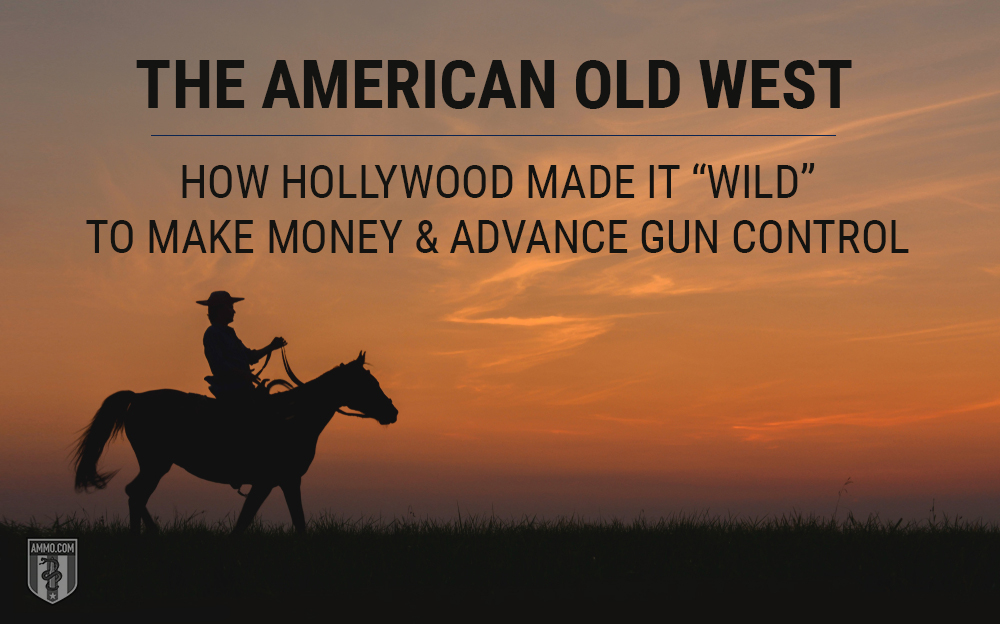
The American Old West: How Hollywood Made It “Wild” to Make Money & Advance Gun Control

Via Alex

West World: How Hollywood Misrepresents the Old West to Make Money & Advance Gun Control

Hollywood has a clever way of distorting our perspective on history, and a great example of this is Western film – a movie genre we've all come to love. Cattle rustlers, guns blazing, outlaws running loose, and vigilantes dishing out vengeance indiscriminately. These scenes have become more synonymous with the American Frontier than Winchester and their "Cartridge That Won the West." But these fictional tales have produced more than entertainment for over a century; they've also contributed to an ongoing, subtle push for gun control, all while making Hollywood millions.

Revisionist history books tell us that the “Wild West” was an anarchic period of time that was not conducive to human prosperity. Images of a Hobbesian nightmare – a life that is brutish and short – are ingrained in our consciousness thanks to decades of public schooling and violent images on the silver screen which are light on actual history and heavy on creative license.

More @ Ammo.Com

Tragedy, Revenge, and the M41A Pulse Rifle


As March turns into April we will today explore one of the most controversial killings in modern times. This gruesome crime touches on the sticky subjects of corporate greed, combat veterans emotionally damaged by their service, and the unprecedented effectiveness of modern military technology.

Naylon Haddock was a complicated man. The second wealthiest human on the planet at the time of his death, Haddock’s life was inextricably entwined with the company he ran. As CEO of the Weyland-Yutani Conglomerate, Naylon Haddock wielded the kind of power normally reserved for elected heads of state.

More @ Guns America

Run Through The Jungle: Vietnam War Weapons

photo of vietnam soldier by ap photographer horst faas

The brutality of the Vietnam War was the defining event of a generation. The decade long war unfolded during a time of cultural divide in the U.S. with mass media echoing voices of the counterculture in disapproval. Arts and entertainment became politicized with events like Woodstock ’69, resulting in some of the most influential work from musicians, filmmakers, and artists of the 20th century.

Militarily, the war taught Western powers many lessons in guerrilla tactics, lessons which resonate today with our conflicts in the Middle East and Southwest Asia. Urban fighting in small spaces against combative armed peasants (Peasants?) became the new standard. Although a lot has evolved since the 1960s and 1970s in combat armaments, modern small arms have a direct lineage similar to those used five and six decades ago. Let’s take a look at some of the legendary small arms which were the face of the Vietnam War.

More @ Wideners

Georgia House approves bill protecting Confederate, state monuments

Via David


The Georgia House voted Thursday to increase the penalties against those who damage the state’s public and private monuments — and make it more difficult to remove or relocate Confederate markers.

It passed 100-71.The bill’s sponsor, Chickamauga Republican state Sen. Jeff Mullis, has said he proposed Senate Bill 77 “to protect all monuments.”

More @ AJC

Poll: 50% of Hispanic voters approve of Trump, GOP regains ballot lead

Screen Shot 2019-03-29 at 1.37.55 PM.png
Republicans lead the generic ballot for Congress, 47 percent to 43 percent.

As President Trump doubles down on his pledge to build a southern border wall, Hispanics are showing broad support for him, according to a new survey.

Some 50 percent of Hispanics approve of the president’s job, according to the latest McLaughlin & Associates poll of likely general election voters.

What’s more, the Republican Party has regained its edge over Democrats in the generic congressional ballot.

"The Attempted Coup of the United States Government"

Via Billy

Sunday, March 31, 2019

Hoaxed Movie Trailer

Via The Feral Irishman

Capitalism Instigated by the Devil

Image result for (Southern Accent: From Uncle Remus to Oak Ridge, William T. Polk, William Morrow and Company, 1

The writer below asks the question: “Should the South become a replica of the industrialized North, with all the advantages and disadvantages that go with that way of life? Or does the South have something essential and unique which is worth preserving? Does Birmingham want to be another Pittsburgh, Richmond another Chicago, Raleigh another Newark, or Charleston another Detroit?” Calhoun biographer Margaret Coit pondered “Whether the South of today [1950], in the throes of warborn prosperity, will sacrifice the remaining values of its way of life by accepting the industrial democracy against which Calhoun fought . . ?”
Bernhard Thuersam, www.Circa1865.org  The Great American Political Divide

Capitalism Instigated by the Devil

“The not quite immoveable object is, of course, the Southern way of life. It arises more from instinct than philosophy; back of it are the ancient traits and ingrained habits of a people who are notoriously set in their ways.

Suspicion of the Calvinistic-Puritanical-Yankee notion of “work for work’s sake” is one of those traits. A Calhounistic “wise and masterly inactivity” is more to the Southern taste as a general rule. When Southerners read the tributes of Northern poets to work, such as James Russell Lowell’s “and blessed are the horny hands of toil,” they doubt whether either writer had enough callouses on his hands to know what he was talking about.

Such pep talk makes Southerners tired; they have to go somewhere and lie down to digest it. One reason the South loves cotton farming so much is that it gives them about six months of each year to loaf and invite their souls. If the soul refuses the invitation, they just loaf.

The South has had a long and deep-seated suspicion of industrialization. It wants the fruits of industry, but not the tree. This attitude goes back to Thomas Jefferson, if not further. Southerners have always been convinced that the planter is the nobler work of God than the manufacturer, the farmer than the mill hand. While the Southerner may not remember the exact words which Jefferson used in the Notes on Virginia in 1785, the sentiment is bred in his bone:

“Those who labor the earth are the chosen people of God . . . while we have land to labor then, let us never wish to see our citizens occupied at a work-bench or twirling a distaff. Carpenters, masons, smiths are wanting in husbandry, but, for the general operation of manufacture, let our workshops remain in Europe . . . The mobs of great cities add just so much to the support of pure government as sores do to the strength of the human body.”

In the 1850s Southerners talked about the evils of capitalism with its “wage slaves” as bitterly as if they had been Karl Marx and Friedrich Engels, though to be sure it was not the capitalism of the Southern planter, but the capitalism of the Northern manufacturer to which they objected.

This is the South which not only likes the Negro “in his place” but likes every man in his place and thinks there is a certain place providentially provided for him. To this South, industrialism, with its shift from status to contract and its creation of a new-rich, rootless and pushing class of people, is plainly instigated by the devil.”

(Southern Accent: From Uncle Remus to Oak Ridge, William T. Polk, William Morrow and Company, 1953, excerpts pp. 243-245)