Sunday, June 16, 2019

Defense Secretary Mattis Had Secret Dinner With Amazon Official Before $10 Billion Contract Announced, Tucker Carlson Reports

Via Billy


Defense Secretary Jim Mattis had a secret meeting with a top Amazon cloud sales executive in 2017 before the Pentagon announced a $10 billion cloud computing contract that critics say was designed to be fulfilled only by Amazon, Fox News' Tucker Carlson reported on Friday.

ADHD

Via The Feral Irishman


Oh! My PaPa


Plantations of the Old World

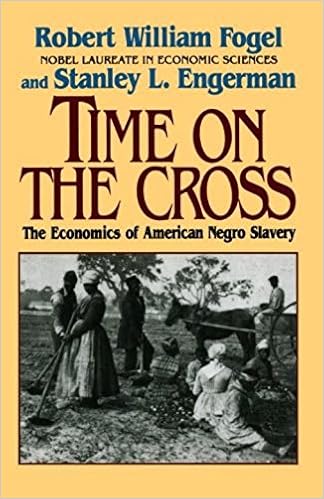
Image result for Time on the Cross: The Economics of American Negro Slavery, W. Fogel


When Christopher Columbus set sail “on his first expedition across the Atlantic, accumulated imports of Negro slaves into the Old World were probably in excess of twenty-five thousand,” and many white slaves worked the Mediterranean sugar plantations with them.  By the last half of the sixteenth century the center of sugar production shifted across the Atlantic, and by 1600, Brazil had become Europe’s leading sugar supplier. Portuguese ships brought needed labor for Brazilian plantations, slaves readily purchased from the tribes of West Africa.
www.Circa1865.org   The Great American Political Divide

Plantations of the Old World

“Slavery is not only the most ancient but also one of the most long-lived forms of economic and social organization. It came into being at the dawn of civilization, when mankind passed from hunting and nomadic pastoral life into primitive agriculture. And although legally sanctioned slavery was outlawed in its last bastion – the Arabian peninsula – in 1962, slavery is still practiced covertly in parts of Asia, Africa and South America.

One high-water mark was reached during the first two centuries of the Roman Empire when, according to some estimates, three out of every four residents of the Italian peninsula – twenty- one million people – lived in bondage. Eventually Roman slavery was transformed into serfdom, a form of servitude that mitigated some of the harsher features of the old system.

The Italians were quite active in importing slaves from the area of the Black Sea during the thirteenth century. And the Moors captured during the interminable religious wars were enslaved on the Iberian peninsula, along with Slavs and captives from the Levant [eastern Mediterranean].

Black slaves were imported into Europe during the Middle Ages through the Moslem countries of North Africa. Beginning about the middle of the fifteenth century, the Portuguese established trading posts along the west coast of Africa below the Sahara with the aim of capturing or making relatively large purchases of black slaves. Although Negroes continued to be imported into the Old World until the beginning of the eighteenth century, it was the New World that became the great market for slaves.

It was Europe’s sweet tooth, rather than its addiction to tobacco or its infatuation with cotton cloth that determined the extent of the Atlantic slave trade. Sugar was the greatest of the slave crops. Between 60 and 70 percent of all the Africans who survived the Atlantic voyages ended up in one or the other of Europe’s sugar colonies.

Sugar was introduced into the Levant [eastern Mediterranean] in the seventh century by the Arabs. From the twelfth to the fifteenth centuries [Mediterranean] colonies shipped sugar to all parts of Europe. Moreover, the sugar produced there was grown on plantations which utilized slave labor. While the slaves were primarily white, it was in these islands that Europeans developed the institutional apparatus that was eventually applied to blacks.”

(Time on the Cross: The Economics of American Negro Slavery, W. Fogel and S. Engerman, W.W. Norton, 1974, excerpts pp. 13-17)

How To Create Conflict

Via Billy

 Empty Classroom In Elementary School.

We are living in a time of increasing domestic tension. Some of it stems from the presidency of Donald Trump. Another part of it is various advocacy groups on both sides of the political spectrum demanding one cause or another. But nearly totally ignored is how growing government control over our lives, along with the betrayal of constitutional principles, contributes the most to domestic tension. Let's look at a few examples.

Saturday, June 15, 2019

Oh, my......

Via Dennis Le

 Image may contain: 1 person

Holtzman’s Survival Kit Paracord Grenade The #1 Best 48 Tool Emergency kit

Via The Daily Timewaster 

Image result for Holtzman’s Survival Kit Paracord Grenade The #1 Best 48 Tool Emergency kit

Don't leave home without your Holtzman's Gorilla Survival 48-in-1 paracord grenade survival kit, which includes 48 tools and will help protect you and your loved ones.

More @ Amazon

True American Whiggery: John Tyler and Abel P. Upshur


This piece is taken from Brion McClanahan and Clyde Wilson Forgotten Conservatives in American History

Two dates changed the course of American political history. On 13 September 1841, the Whigs expelled President John Tyler from their Party, outraged over his “betrayal” of what they considered true Whig political and economic principles. Shorty over two years later, on 28 February 1844, Abel P. Upshur, Tyler’s trusted Secretary of State and perhaps the best Constitutional scholar in the United States at the time, was killed in an accident on the U.S.S. Princeton. Both men personified American Whiggery and both are forgotten or maligned by the modern American historical profession.

Historians generally consider Tyler’s presidency to be an abject failure while Upshur receives mention only in regard to his tragic death and his defense of slavery. Philosophically, however, their brand of States’ Rights Whiggery helped form the backbone of the American political tradition.

“Each Side Knew Human Bondage”


At the time of Columbus’s exploration in 1492, slavery in West Africa was common. The dominant Songhay, Ghana and Mali empires waged war against each other, enslaved those captured, and exacted slave tributes from their weaker neighbors. When the first Europeans ventured down Africa’s western coast, they found these tribes of substantial military power who were not to be threatened.
 www.Circa1865.org   The Great American Political Divide

“Each Side Knew Human Bondage”

“The Africans, like other people throughout the world, had practiced slavery since prehistoric times. They took prisoners of war and forced them into domestic service, as they did to their criminals. A Dutchman describing Guinea in the sixteenth century wrote:

“The Kings of the Townes have many Slaves, which they buy and sell, and get much by them; and to be briefe, in those Countries there are men to be hired to worke or goe of any errand for money, but such as are Slaves and Captives, which are to spend their days in Slaverie.”

In Dahomey, one of the kingdoms, the ruler owned plantations run by overseers, who were expected to derive the maximum return from the estates. The slave laborers were inhumanly driven . . . a group of people known as the Nupe conquered and enslaved the more primitive tribes of northern Nigeria and set them to agricultural labor. The Ashanti used slaves in systematic agriculture and imposed a tribute of 2,000 slaves annually on one defeated tribe.

In Africa’s medieval states people conquered in wartime were treated as the feudal vassals had been. Historian Basil Davidson points out: “In the Songhay region of the fifteenth century along the Middle Niger, “slaves” from the non-Muslim peoples of the forest verge were extensively used in agriculture . . . “

A follower of the great Songhay ruler Askia Muhammud, [African scholar Mahmud] Kati wrote that when the emperor took the throne in 1493, he inherited 24 tribes of vassals. As time passed, the difference in status between the free man and the “slave” became less clear . . . [with] the decisive factor [being] the widening gap between the nobility and the rest of the people. All were subjected to the rulers to feudal arrangements by mutual duties and obligations. It was a system that varied from place to place . . . but it was essentially a tribal feudalism, and in some parts of Africa it still persists.

From their coastal forts . . . the Europeans conducted peaceful trade with the Africans. Each side had goods that the other wanted. Each side knew human bondage. The medieval Europeans sold slaves even of their own faith or nation, as did the Africans. Neither continent was a stranger to the slave trade. Both sides had long accepted it, and both sides joined in practicing it.”

(Slavery, A World History, Milton Meltzer, Da Capo Press, 1993, excerpts Slavery II, pp. 17-23)

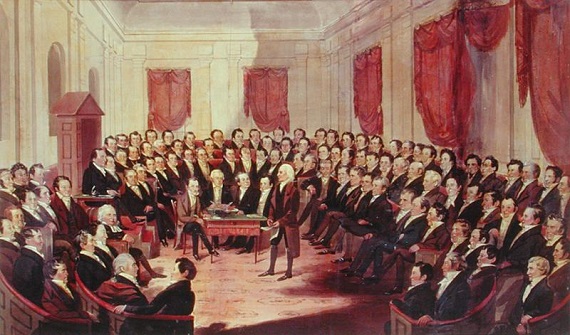
Democracy vs. Aristocracy in Virginia in 1830


There is in some of our libraries a certain book which the writer of this article ventures to believe is not gener­ally as familiar as it should be to the student of politics. For himself, he chanced one day, several years ago, to blow the dust from off its time-worn binding and nine hun­dred dreary-looking pages of fine print, to read it through with zeal, and he opens it with interest to-day. It depicts the critical moment of the fierce struggle which was waged between the democratic and aristocratic forces of Virginia two generations ago; but the principles involved in that struggle belonged to no one State then, concern us to-day, and will concern generations to come.