Friday, July 5, 2019

Conan the Southerner?

 
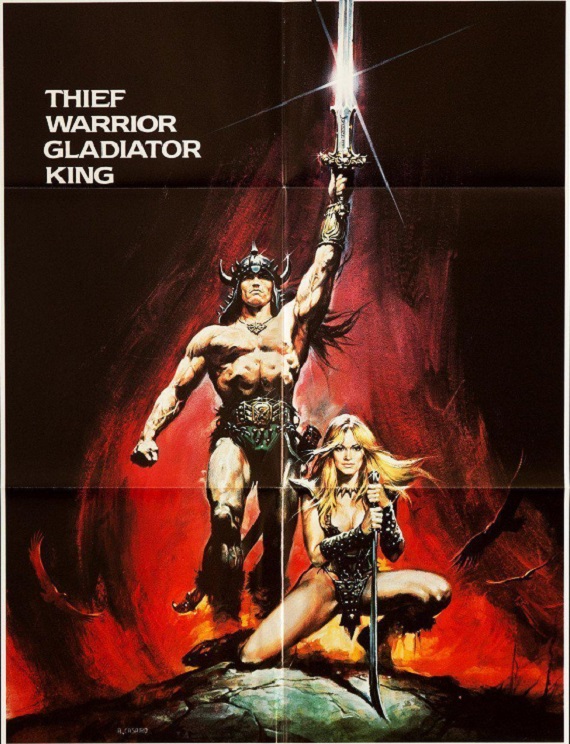
“Between the time when the oceans drank Atlantis, and the rise of the sons of Aryas, there was an age undreamed of. And unto this, Conan, destined to bear the jeweled crown of Aquilonia upon a troubled brow. It is I, his chronicler, who alone can tell thee of his saga. Let me tell you of the days of high adventure!”
When I was a college student it was fashionable for the left-leaning intellectual crowd to say things like “America has no culture.” They would haughtily offer as proof the lack of any sophisticated homegrown mythology.  Stories such as Paul Bunyan and Johnny Appleseed didn’t count because they were just tall tales for rednecks and rubes.

Fine Election Strategies

 Image result for A Life in Our Times, A Memoir: John Kenneth Galbraith,

The presidential election of 1868, between General Ulysses Grant and former-Governor Horatio Seymour of New York, was decided by a mere 300,000 votes out of nearly 6 million.

A brilliant Radical Republican strategy designed to keep the defeated South in political vassalage was enacting black male suffrage in occupied Southern States, while disenfranchising white males as possible. This enabled Grant to defeat Seymour with an all-important swing vote provided by 500,000 freedmen.

Shilling for voting blocs was not new in America by Grant’s time: Lincoln himself purchased a Springfield, Illinois German-language newspaper with which to hawk his campaign and corner the German vote. One hundred years later, Kennedy’s party used a voting bloc to defeat Richard Nixon.
www.Circa1865.org   The Great American Political Divide

Fine Election Strategies

“The finest election strategies,” John F. Kennedy remarked after the 1960 campaign, “are usually the result of accidents.”

One further consequence of the Nixon/McCarthy attack [on Democrat Adlai Stevenson] could not have been more brilliant had it been planned. On October 24 . . . [Dwight] Eisenhower said that if elected, he would “go to Korea.” Implicit therein was the promise to seek a negotiated end to the Korean War. It was electrifying.

As always in the United States there was a real difference between the vocal commitment to the heroic and warlike stance and the deeper commitment to peace. Meanwhile, so frozen was the Democratic position by now that we did not even recognize the power of the Eisenhower initiative. And the response [by Stevenson], when it came, was pathetic in its stereotype. “The root of the Korean problem does not lie in Korea. It lies in Moscow . . .”

[Regarding the later election campaign of John F. Kennedy in 1960, author Galbraith states further:] “During the campaign that year Martin Luther King had been jailed in Georgia, and there was much favorable reaction when, at the urging of staff members, Kennedy promptly telephoned Mrs. King and Robert Kennedy as promptly telephoned the judge” (Ambassador’s Journal, 1969, pg. 6).

Kennedy’s phone call “received considerable attention in the African-American community, and some commentators argue that the impact on African-American voters helped Kennedy with the election.”

It is reported that Robert Kennedy called the judge and berated him – King was released the next day. Both Kennedy brothers had expressed concerns about King’s association with known-communist like Bayard Rustin, who served as King’s mass demonstration organizer.

(A Life in Our Times, A Memoir: John Kenneth Galbraith, Houghton Mifflin Company, 1981, excerpts pg. 299)

Vietnam 1969

Via Dung Dang 

Image may contain: 2 people, people sitting and outdoor

New Hampshire Governor to Veto all Gun Control Bills

Via Iver


New Hampshire Governor Chris Sununu made waves in 2017 when he signed Constitutional Carry into law.

However, in 2019, gun control is likely coming to his desk thanks to New Hampshire’s Democrat-controlled state legislature.

He had previously told Democrats that gun control is not one of his priorities.

Communists Burn American Flag, Assault Secret Service Outside White House

Via Billy

WATCH: Communists Burn American Flag, Assault Secret Service Outside White House

Members of the Revolutionary Community Party burned an American flag outside of the White House on Thursday shortly before President Donald Trump's "Salute to America" speech. They then threw the flag on multiple Secret Serviced agents.

A veteran grabbed the half-burned flag and attempted to put it out, clearly upset at the Communists' gesture. Secret Service eventually used a fire extinguisher to put out the fire.

More @ Townhall

New Zealand Compliance Rate for Gun Buyback Program Stands at Less than 1 Percent


The gun buyback program in New Zealand is not progressing as officials had hoped. After the county’s parliament banned most semi-automatic weapons in the wake of a deadly massacre, less than one percent of the now-prohibited firearms have been turned in.

New Zealand gun owners were not required to register AR-type rifles prior to the ban, so law enforcement officers aren’t sure precisely how many “military-style semi-automatic weapons” need to be turned in. But police told New Zealand radio host Ryan Bridge that “probably hundreds of thousands” of guns are now prohibited, and the Washington Post reported this week that only 700 firearms have been voluntarily surrendered.

Thursday, July 4, 2019

Saigon Street Life in 1965 by Bruce Baumler – Part 2


Continuing the visual spectacle of Saigon from part 1 of the collection, here are more candid shots of the city’s street life in 1965.

While a lot of landmarks have endured the test of time — such as Le Loi Boulevard, Ben Thanh Market and a host of other religious structures — others have succumbed to development pressures.

The Eden Department Store, Saigon Tax Center and Nguyen Hue Fountain now only exist in our collective memory.

More @ Saigoneer

Banana Bread, Blue Berries.......

.......and the Vardells. :)


 Shy though I tried my best. :)


Home picked /made Blueberries and Banana Bread!  Just wonderful.

Breaking Down “Civil War 2″ Part 2

Via Knuckledraggin' My Life Away


Civil War PC is Mental Imprisonment


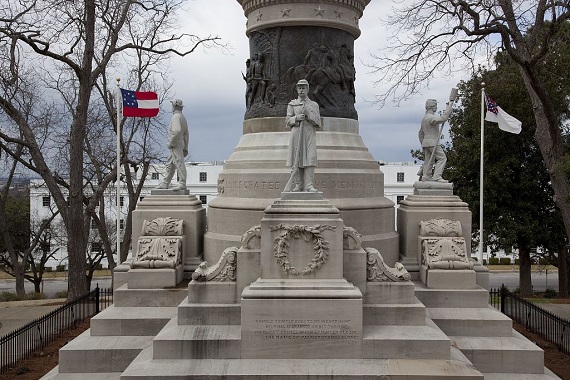
Yesterday The Times published an article titled: “What Should Happen to Confederate Statues?” Among its remarks were the following:

Many Confederate statues being debated today did not originate during the Civil War era, when Southerners built obelisks in cemeteries and other tributes with themes of mourning. The towering figures of individual soldiers and monuments in public squares generally came later, historians say, during the rise of Jim Crow laws and subsequently during a backlash against desegregation.

“That is when you are simultaneously seeing the dedication of these monuments,” said Christy Coleman, the chief executive of the American Civil War Museum in Richmond, Va. “They are not separate things. They are a reassertion of the ideal.”

The Southern Poverty Law Center (SPLC) originated that bogus narrative when they released the chart below. While it documents that the vast majority of the “towering figures of individual soldiers and monuments in public squares” were erected between 1900 and 1920, the SPLC falsely attributes the surge to white supremacy and Jim Crow. Only someone mentally imprisoned by political correctness could reach such a conclusion for four reasons.

First, and foremost, the period coincided with the war’s semi-centennial when veterans were dying off. A twenty-one year old who went to war in 1861 was sixty years old in 1900 and eighty in 1920.

Second, the same factor caused the number of Union soldier statues erected to swell during the same era. Presumably, Jim Crow and white supremacy cannot explain the Union statue-building. Third, the South was too impoverished for decades after the war to financially afford memorials like those that Northerners had been building for years in honor of their Civil War heroes. Notwithstanding its population growth, the South did not recover to its of pre-war economic activity level until 1900.

Fourth, Jim Crow was not isolated to 1900 – 1920. It extended for years on either side of the interval.

When The Times attributes the second minor surge of Confederate monument building during the 1960s to “a backlash against segregation” it overlooks the fact that the early 1960s coincided with the Civil War Centennial. Although the United States Post Office issued five Civil War commemorative stamps between 1961 and 1965, only  an imprisoned mind could believe that the Office was motivated by “a backlash against segregation.”