Monday, July 22, 2019

Black Southern Support for Secession and War

 A drawing published in Harper's Weekly, depicting African American soldiers in the Confederate States Army. Image courtesy of the Library of Congress.

Sooner or later any student of the War for Southern Independence will run across discussion of “black Confederates,” which may well be the most controversial topic related to the war. From an objective standpoint it might seem odd that there is any controversy at all. The South had a large black population in 1861, mostly slave but some free, and these men and women held a diverse set of opinions, just as the white population did. Simply playing the odds will tell us that someone among the four million black men, women and children in the South would choose to support secession.

Slaves had little choice in whether they participated in supporting the war effort (though they had more options than might be expected) but while the “free men of color” as they were often called were not treated as equals by the white population, they were often skilled tradesmen and businessmen who owned property, and many had family who had lived in their home state for several generations, so they had deep roots in the South. Some were veterans of past military conflicts. The idea that they would have an interest in the outcome of the war and might well choose to side with their home states over an invading army should surprise no one, especially early in the conflict before Lincoln’s Emancipation Proclamation changed the calculation by making freedom for the black population into a wartime goal of the Union.

Chronicles of the South

 River Plantation

Introduction to Chronicles of the South: In Justice to So Fine a Country

“The South” is a Problem. A Big Problem. This has been true at least since the 1790s when Mr. Jefferson and his friends rallied to put the kibosh—only temporarily, alas—on New England’s attempt to reinterpret the new Constitution and set up a central government powerful enough to enforce its economic and cultural domination. As Mr. Jefferson wrote at the time, “It is true we are completely under the saddle of Massachusetts and Connecticut, and that they ride us very hard, cruelly insulting our feelings, as well as exhausting our strength and substance.”

LET'S TALK ABOUT EPSTEIN'S OTHER ISLAND

Via Iver


Operation Southern Lights

Via Cousin John

A cigarette trafficking ring based in Cumberland County was busted in what U.S. Marshals are calling one of the largest operations of its kind.

U.S. Attorney Robert J. Higdon said “Operation Southern Lights” worked to track cigarettes being smuggled to New York where they were sold illegally.

The cigarettes were bought in large quantities from FreeCo. in Fayetteville.

More @ CBS

*******************

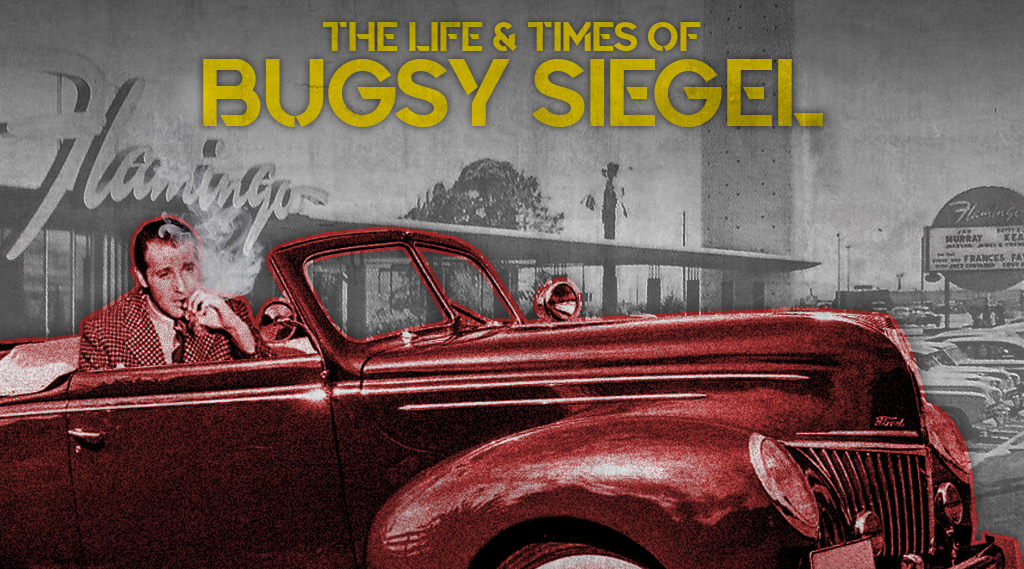
The Life & Times (And Guns) Of Bugsy Siegel

 photo of the flamingo hotel and casino in las vegas

Bugsy Siegel was born Benjamin Siegel on Feb. 28, 1906, in Williamsburg, Brooklyn. His parents were Jewish immigrants. They settled in New York City around the turn of the century, later moving to Manhattan’s Lower East Side. In that breeding ground for crime Benjamin discovered his passion for street life.

The moody Siegel had a violent temper that could erupt at any time. Because of this, his friends remarked that he was “crazy as a bedbug.” From that point on friends called him “Bugsy.” He hated the nickname but it stuck throughout his short life.

In 1918, Siegel became friends with another hoodlum, Meyer Lansky, and his life of crime was up and running.

More @ Wideners

Marianne Williamson Asked White People to Apologize to Black People for Past ‘Evils’

Via John 


Prior to announcing her candidacy for the Democrat nomination for president, spiritual author Marianne Williamson asked white people at an event to apologize to the black people in attendance for the “evils” perpetrated against black people throughout United States history.

Williamson, whose “prayer” came during her “Love America Tour” at the Unity of Houston Church in 2018, asked the white people to hold hands with nearby black attendees.

As the audience repeated her every word, sentence by sentence, Williamson said:

More @ Breitbart

Sunday, July 21, 2019

I Have No Words.......

Via The Feral Irishman


Commander Cody & His lost Planet Airmen - Hot Rod Lincoln 1974

Via Bill

Watch: Video Finally Comes Out of Trump ‘Forcibly Kissing’ Woman … She’s Been Lying the Whole Time


A newly released phone video may shed light on Alva Johnson’s pending lawsuit claiming President Donald Trump “forcibly” kissed her during a 2016 campaign stop.

Johnson, who at the time worked for Trump as a campaign staffer, filed suit
on Feb 25, 2019 against Trump for battery and discrimination based on her race and gender.

In a bombshell disclosure, however, President Trump’s lawyers just released a 15-second video they claim proves Johnson is lying about her encounter with President Trump.

 More @ WJ

Ken Burns was wrong about Vietnam War: Complaint # 9,982.......:)


The most pervasive myths in the Burns series are:

• The war had no reasonable, just, or moral cause — all easily refuted by the facts.

• The war was unwinnable — demonstrably disproved by the events of 1972. 

• Ho Chi Minh was a popular nationalist — absurd in the light of his murderous record.

• Anti-war activists had no connections to Communist front organizations. See Chapter 19 of my book or read Dr. Louis Fanning’s 1976 book, “Betrayal in Vietnam.”

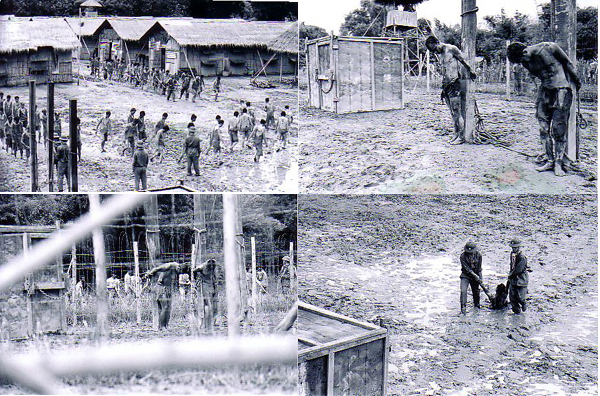
• A Communist victory in Southeast Asia had no significant consequences on the people of South Vietnam, Cambodia and Laos — also absurd in view of mass murders, slaughter, starvation, brutal concentration camps and losses at sea while trying to escape. Even in the early years, the Communists assassinated more than 30,000 South Vietnamese village leaders, school teachers and government officials. 

 *******************

Dated

 The late Harry G. Summers Jr., colonel of infantry and distinguished faculty member of the Army War College, often called people’s attention to the fact that considerable differences in the treatment of the Vietnam War can be seen in the literature published in academia and that published by the veterans who served during the war. Summers also called attention to the fact that veterans’ perspectives differ considerably according to the time frame of their involvement and their role.