Tuesday, March 17, 2020

Black Codes in Illinois

Hardcover The Black Civil War Soldiers of Illinois : The Story of the Twenty-Ninth U. S. Colored Infantry Book

www.Circa1865.org  The Great American Political Divide

As a result of extreme racial prejudice toward blacks, the 109th Illinois Regiment, formed in September 1862, was disarmed and imprisoned during the war due to opposition in the ranks to Lincoln’s proclamation emancipating slaves and arming them.  Another regiment, the 128th Illinois formed in November 1862, “was disbanded because of a high desertion rate, possibly caused by the prospect of white soldiers serving in the army with black troops.” 

But as other Northern governors discovered with Lincoln shrewdly allowing States to count black men, no matter their place of origin or how obtained, against their State troop quotas, white military age men could remain home. And if the latter were caught in the draft, brokers found black men to be paid substitutes.

Black Codes in Illinois

“State authority over one aspect of the US Colored Troops was retained; States were authorized to recruit black soldiers and to provide camps of assembly for their organizations into regiments and batteries. The State’s incentive was that a black soldier counted the same as a white recruit in meeting the State’s Washington-imposed volunteer quota. On the day of mustering in . . . black units became a federal responsibility.

When conscription began in mid-1863, meeting volunteer quotas became more important . . . Exemptions could be purchased, however, and paid substitutes were accepted, thus benefiting the more affluent members of society.  The draft itself caused riots among the working class in New York, and numerous assaults on black troops were reported.

Illinois governor Richard Yates [believed] that the rebellion had to be destroyed and that Illinois was ready for the call to total war.  Black interest in military service was not high, but it was encouraged by black leader Frederick Douglass’ March 1863 call, “Men of Color to Arms” . . . His emphasis on the killing of slaveholders did not do much to stir blacks in the North, and the fact that blacks were paid less than their white comrades and were refused [officer] commissions made the recruiting job difficult.

The background of race relations in Illinois was not one of tolerance . . . Only a year after the State joined the Union, 1818, it passed the first of a series of “black codes” that continued in effect in various forms until 1865. These laws required blacks to record at the county seat a “certificate of freedom” and a description of family members, information allowing overseers of the poor to expel them from the State when it was thought necessary. Other provisions withheld court standing and the vote from blacks, allowed flogging of “lazy” or disobedient blacks, and made the harboring of a black by another black a felony calling for a fine and a thirty-five stripe whipping.

Free blacks entering the State had to post a one-thousand dollar bond as a guarantee against becoming a public charge, and blacks who could not pay fines could be sold to indentured service. Furthermore, blacks could not serve in the militia and were not provided education by law.  Asked in 1862 if the State should modify a law making it “a crime for a Negro to set foot in Illinois,” 150,000 out of 260,000 voters in a constitutional referendum opposed repeal.”

(The Black Civil War Soldiers of Illinois: The Story of the Twenty-Ninth US Colored Infantry, Edward A. Miller, Jr., University of South Carolina Press, 1998, excerpts pp. 4-7)

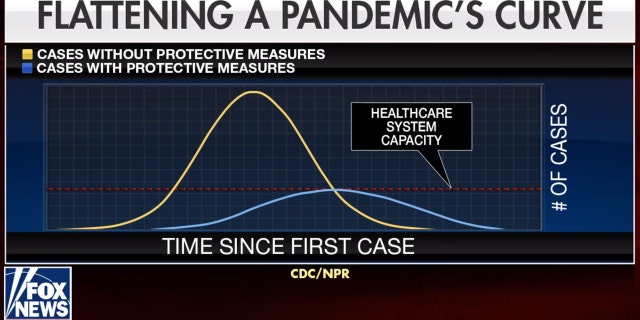
When will coronavirus peak in the US? Dire report shows why 'flattening the curve' matters

Via Billy

Health experts have echoed the need for people to take precautions to help "flatten the curve" in order to provide appropriate medical care for patients.

As millions of Americans urged to limit their activities amid the coronavirus outbreak are wondering when life may return to normal, a scientific report released Monday offers a grim future of how many could end up dead if no actions are made to limit the spread of the virus.

U.S. Surgeon General Dr. Jerome Adams told “Fox & Friends” on Monday that, at this moment in time, the U.S. is “at a critical inflection point in this country” in regards to COVID-19 infections.
“People, we are where Italy was two weeks ago in terms of our numbers,” Adams said. “And we have a choice to make as a nation. Do we want to go the direction of South Korea, and really be aggressive and lower our mortality rates or do we want to go the direction of Italy.”

Miracles Never Cease: ‘REMARKABLE’: CNN Anchor Praises Trump On Coronavirus: ‘Kind Of Leader That People Need’

Via Billy

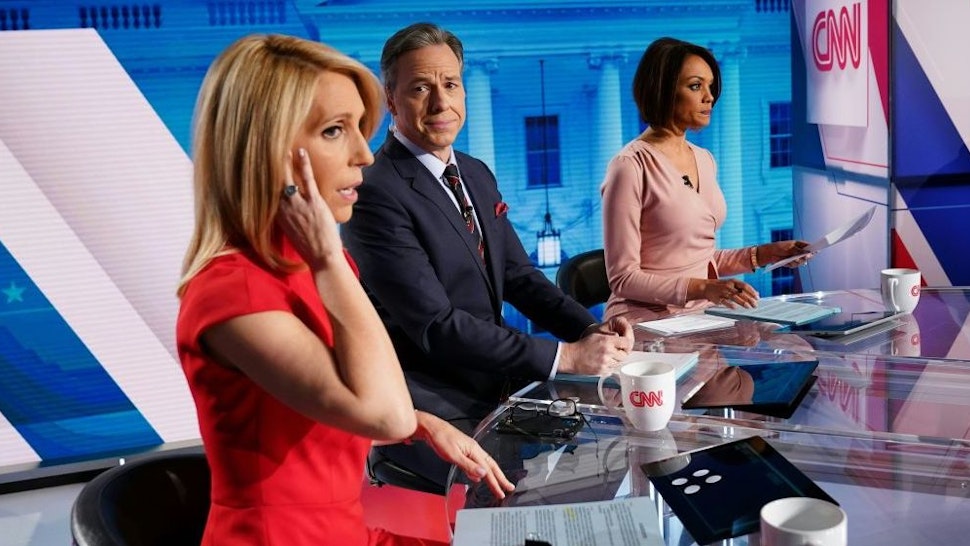
CNN news anchor Jake Tapper (C), flanked by Univision's news anchor Ilia Calderón (R), watches as co-anchor Dana Bash adjusts her ear piece before the start of the 11th Democratic Party 2020 presidential debate with former Vice-President Joe Biden and Vermont Senator Bernie Sanders in a CNN Washington Bureau studio in Washington, DC on March 15, 2020.

On Tuesday, CNN anchor Dana Bash applauded President Donald Trump on his handling of the China-originated novel coronavirus (COVID-19) outbreak, praising Trump as the “kind of leader that people need” in this time of crisis.

After dismissing criticism from media reporter and American neurosurgeon Sanjay Gupta, Bash said Trump’s “tone” over the past two days should be applauded on an “American” and “human” level.

NC: Firearms Laws Update in Declared State of Emergencies

Via Cousin John

NCSA Store

Prior to 2012, during a declared state of emergency, several General Statutes allowed restrictions and prohibitions to be imposed on the “possession, transportation, sale, purchase, storage and use of dangerous weapons and substances, and gasoline.” “Dangerous weapons” included firearms such as handguns, rifles, and shotguns.” Those General Statutes, as they applied to firearms, were held unconstitutional in the federal court case of Bateman v. Perdue, 881 F.Supp.2d 709 (2012).

As a result, the North Carolina General Assembly repealed those General Statutes and enacted the current statute [G.S. 166A-19.31] to address this issue, which became effective October 1, 2012.

                                                          More @ NAMSOUTH

The Sober Math Everyone Must Understand about the Pandemic

Via Daughter Virginia


I wrote this post on Facebook on Thursday Night, March 12th 2020. Since I wrote it, the post been shared 120k times and I’ve been asked to repost it here so people can share on Twitter and other platforms. Please distribute freely.

It’s reposted in its entirety here, with no edits.


This is a long post addressing two underlying issues with the current response to the pandemic that leave me concerned. It’s the longest post I’ve ever written.

More @ Medium

Monday, March 16, 2020

"The truth that no one is talking about."

Via Daughter Virginia


The Coronavirus Hoax, Ron Paul

Via Cousin John

undefined

Governments love crises because when the people are fearful they are more willing to give up freedoms for promises that the government will take care of them. After 9/11, for example, Americans accepted the near-total destruction of their civil liberties in the PATRIOT Act’s hollow promises of security.

It is ironic to see the same Democrats who tried to impeach President Trump last month for abuse of power demanding that the Administration grab more power and authority in the name of fighting a virus that thus far has killed less than 100 Americans.

Declaring a pandemic emergency on Friday, President Trump now claims the power to quarantine individuals suspected of being infected by the virus and, as Politico writes, “stop and seize any plane, train or automobile to stymie the spread of contagious disease.” He can even call out the military to cordon off a US city or state.

Health official: Coronavirus peak is over in China: Travel restrictions lifting, businesses reopening in Wuhan

Via Billy


With a marked slowdown in new infections at the epicenter of the novel coronavirus, China's top health commission says the virus has passed its peak in the communist nation.
Businesses in Wuhan and Hebei Province have reopened while authorities cautiously ease travel restrictions.

"Broadly speaking, the peak of the epidemic has passed for China," said Mi Feng, a spokesman for the National Health Commission.

"The increase of new cases is falling," he said.

More @ WND

“The Last Roman”: John Caldwell Calhoun

 calhoun 2

 Indeed he was, as I remember my Mother's words.

Born in 1782 near Abbeville, South Carolina, Calhoun’s educational opportunities were limited, albeit advanced by the occasional tutelage offered by his brother-in-law, Reverend Moses Waddel.

After his parents’ death and a period of self-education, Calhoun entered Yale College, studying under the arch-Federalist Dr. Timothy Dwight. He proceeded to study law for two years under Judge Tapping Reeve at the Litchfield Law School, the most prominent institution devoted to legal training during this period. Returning to his native South Carolina to practice law, a pursuit he considered “both dry and laborious,” Calhoun was married and served two terms in the South Carolina Legislature until elected to the U.S. House of Representatives in 1811. As a congressman, Calhoun continued to embody republican principles and acquired the reputation as a moral statesman who regarded republicanism and patriotism as synonymous: he supported the War of 1812; he revised Madison’s original national bank proposal and backed limited internal improvements; and he continued to praise a free economy and a regime founded upon “reason and equity” that was surrounded by a world of “fraud, violence or accident.”

Washington Post: All the Fake News That’s Fit to Print


As explained yesterday, Washington Post reporter Courtland Milloy maligned my “Defending Confederate Monuments” speech presented on Lee-Jackson Day in Lexington, Virginia. He asked that I send him a copy while we were sitting together in the front audience row during the preliminaries. I emailed it before I took the podium. After my speech he thanked me and said, “I will be in touch.” But he never contacted me. In a post here, yesterday I responded to his remarks about an incident I don’t recall ever happening. Today I reply to his comments about African-American allusions in the speech.

Why My Confederate Statue Speech Included References to Blacks