Yes, give me a land with a grave in each spot
And names in the graves that shall not be forgot;
Yes, give me the land of the wreck and the tomb–
There is grandeur in graves–there is glory in gloom
[1]
The new Kulturekampf, having already eyed and attacked the more
visible elements of Dixie identity in prominent places across the South,
feels its appetite growing. The long talons, sharpened on their success
in removing public praise for the leaders of the South, now clawingly
reach further and further into the quiet places of Southern repose. They
rail and wail and attempt to rend any fond remaining sentiment to
pieces. Take, for instance, the recent debacle which has disturbed
Forest Hill Cemetery of Madison, Wisconsin.
During the War, Southern prisoners were held in nearby Camp Randall
before being deposited into that Chicagoan horror, Camp Douglas. While
at Camp Randall, some of the men succumbed to illness and injury,
ultimately ending their whittled and weakened days in that sad spot in
Wisconsin. These one hundred forty Southerners never returned home.
Their graves grace a small, green field upon which they had never
warred, but only died.
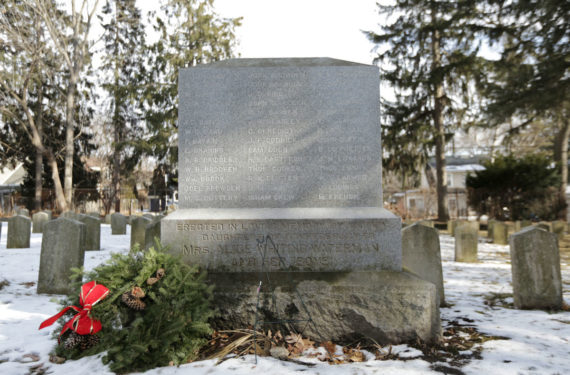
In addition to the bodies of the fallen, the graveyard contained,
until recently, two small memorials lauding their sacrifices. One has
been removed and likely will not return as, it was said, it offered “no
historical value.”
[2]
The other, according to the options on the table, will be altered,
removed, or joined by another display to negate the monument’s message.
A message is inadvertently being made just by these moribund maneuvers. It proclaims clearly to every Southerner:
your
dead are not worthy to be praised. They should, if a person has
decency, be derided and hated. The names of the interred should only
serve as emblems of infamy.
The laughable accusations leveled against the poor men who fell so
far from home are as inane as they are insane. Prime among them is the
idea that they were somehow traitors. A union of states such as the
present was built upon the idea of casting off oppressors. If treason,
so called, is the litmus test of removal from remembrance, then the
Founders must likewise fall. For they, after all, dared raise their
hands against the authority of King George and Parliament, both of which
had a stronger case for legitimacy than that of the Lincoln
administration in 1861. But the word treason merely masks an attempt to
destroy an alternate culture in opposition to the all-consuming maw that
is the present-day United States. The oft-sounded tirades against our
forefathers are but bludgeons to serve this end.
This sad event, which disturbs not only the sleeping soldiers in
their graves, but also the minds of decent people everywhere, serves to
show the end these people desire. Confederate statues along the streets
of once-proud cities are toppled in the name of progress, because, it
was stated, their place in the public eye was too prominent for the
men’s worth. Now we see the natural extension of the same hatred, for an
appetite once fed becomes insatiable. The quiet of a graveyard is thus
disturbed because, lest someone stumble inadvertently upon some marker
lauding Southern valour, they succumb to the message therein. The shady
silence that is proper to tomb-plots will, for a time, ring with
Northern machinery affecting the removal of a this reminder of Southern
spirit.
The great Poet-priest of the South, Father Abram J. Ryan, once remarked that “only the dead are the free.”
[3] It is a damning day when one must even question that.
[1] Ryan, Abram J.,
Father Ryan’s Poems (Mobile: Jno. L. Rapier & Co., 1879), pg 54
[2] Mosiman, Dean, “City to Decide Fate of Two Confederate Monuments in Madison Cemetery,”
Wisconsin State Journal, 29th of January, 2018.
[3] Ryan, pg 74