Friday, February 17, 2012

Don't miss this: What We Can Learn from Singapore

Most excellent.

In March of last year, my wife and I spent ten wonderful days in China as part of a group meeting with church and business leaders. It was an unforgettable experience. I told a group of Chinese students at a church service that I was bringing some of China back with me. Our hosts — from Hong Kong to Shanghai and Nanjing to Beijing — kept us well fed as I patted my stomach.

Economic growth is astounding. Cranes and skyscrapers were going up everywhere. How much of what is going on in China is an economic bubble that will soon burst, I cannot say.

In our many excursions by cars, vans, and buses, I got to speak to a number of Christian leaders who were filling us in on what’s going on in the Malay Peninsula and Indochina Peninsula regions, in particular Singapore and Vietnam. The economies in both countries are booming.

What’s happening in Singapore was the first to catch my attention. Most Americans know little about Singapore except for its punishment by caning. “A convicted male criminal who is between the ages of 18 and 50 and has been certified medically fit by a medical officer may be subjected to judicial caning.” Michael Fay was an American who gained international notoriety when he was sentenced to be caned as an 18-year-old in 1994 for theft and vandalism. He received four strokes across his bare buttocks.

There’s no doubt that the laws and customs of Singapore are different from the United States and other Western nations. The most interesting thing about Singapore is its economy. Consider the following:

Along with Hong Kong, South Korea and Taiwan, Singapore is one of the original Four Asian Tigers. The Singaporean economy is known as one of the freest, most innovative, most competitive, and most business-friendly. The 2011 Index of Economic Freedom ranks Singapore as the second freest economy in the world, behind Hong Kong. According to the Corruption Perceptions Index, Singapore is consistently ranked as one of the least corrupt countries in the world, along with New Zealand and the Scandinavian countries. . . .

The percentage of unemployed economically active people above age 15 is about 2%. Singapore has the world’s highest percentage of millionaire households, with 15.5 percent of all households owning at least one million US dollars. Despite its relative economic success, Singapore does not have a minimum wage, believing that it would lower its competitiveness.

Here’s what I found most interesting about Singapore’s economic philosophy. “The government has rejected the idea of a generous welfare system, stating that each generation must earn and save enough for its entire life cycle.” Even so, there are a number of “means-tested ‘assistance schemes’ provided by the Ministry of Community Development, Youth and Sports in Singapore for the needy.”

If there’s one thing we in the United States can learn from Singapore is its emphasis on self-government, planning for the future for ourselves and families and not to depend on money confiscated from other people.

Go back to Mexico

Hell yes, go. The Vietnamese weren't babied when they came here, but taught ESL and excelled.

Via The Dorkfish Express

A Texas teacher is fighting to keep her job after she admitted to losing her temper and telling a Hispanic student to “go back to Mexico.”

Shirley Bunn, a math teacher at a middle school in Arlington, has been on paid leave since the Sept. 30 incident at Barnett Junior High School, according to a report on myFOXdfw.com.

She was handing out forms to her eighth-grade students when one of them repeatedly asked her for a form in Spanish, by saying, “I’m Mexican. I’m Mexican.”


According to documents made public in the case, the Fox station reported that Bunn told the student he could get the form in the office but he continued to argue by repeating, “I’m Mexican.”

She then blurted out, “Go back to Mexico,” the website reported.

MORE

Almost Home

Via a prompt from Wirecutter's comment

Man, this just kills me everytime I think of it.


The most expensive Starbucks drink ever is….....

That would be a java chip frappuccino in a trenta venti cup with 16 shots of espresso, a shot of soy milk, caramel flavoring, banana puree, strawberry puree, vanilla beans, matcha powder, protein powder, with caramel and mocha drizzled on top.

That’s what a young man named Logan Warren ended up ordering when he asked a barista to make him the most expensive drink possible. (He had a gift card, after all — why not guzzle it down in one giant cup?)

The total on the bill? $23.60.

Of course, Warren might regret actually finishing the drink, which he described as “tolerable, but not good.”

“Imagine a coffee-based health food smoothie that will put you in the hospital if you drink it all,” he wrote. “That’s how it tastes…like Jillian Michaels with a touch of Chuck Norris.”

MORE

Woman bites off man's tongue who tried to rape her

Now, that's my kind of girl!:)

A 25-year-old woman bit off a man's tongue when he tried to sexually assault her at her house in Javalgaon village in the district, police said today.

Anita Pawar, who works as a labourer, was alone at her house in the village on Wednesday when the accused, identified as Dadarao Hare (35), tried to force himself on her, they said.

In a bid to save herself from the attacker, Anita severed Hare's tongue with her teeth, police said.

MORE

Entrenched incumbency is the disease. Fresh blood is the cure.

The tea party isn't dead. It's just looking down ballot. While fiscal conservatives remain split over the GOP presidential candidates, grassroots activists are coalescing around a stellar slate of limited-government candidates looking to reinforce and reenergize the right in Washington.

And in the spirit of the modern-day tea party movement, no entrenched incumbent -- Democrat or Republican -- is safe.

Utah was Ground Zero for the movement's first major electoral upset. In April 2009, this column first reported on a Salt Lake City tea party protest of 2,000 Utahans who repeatedly booed GOP Sens. Bob Bennett and Orrin Hatch for supporting the $700 billion TARP bank bailout. In May 2010, the three-term, 76-year-old Bennett got the boot at the GOP state convention. Young conservative lawyer Mike Lee, who clerked for Supreme Court Justice Samuel Alito, went on to win the seat.

Now, young conservative entrepreneur and renowned state pension reformer Dan Liljenquist is taking on Utah's other big government Republican barnacle, 77-year-old Hatch. Liljenquist excelled in the private sector as a global management consultant and business strategist; he also helmed a privately owned call center company that grew from two to 1,500 employees since its 1995 founding. Liljenquist was elected to the Utah Senate in 2008, where he spearheaded state pension and Medicaid reforms that earned him the non-partisan Governing magazine's 2011 "Public Official of the Year" award.

The Triumph of American Industrialism

Though the smokescreen of African slavery obscures the many economic and cultural causes of the War Between the States, the serious reader easily discovers the two Americas that had developed by the 1850’s, and that the constant economic friction between the two sections since 1787 would lead eventually to separation, and the stronger one subjugating the weaker.

Bernhard Thuersam, Chairman
North Carolina War Between the States Sesquicentennial Commission
www.ncwbts150.com
"The Official Website of the North Carolina WBTS Sesquicentennial"


“Lincoln and his contemporaries interpreted the victory of the North as primarily a triumph of nationalism over States’ rights. That the Union was now in fact “one and indivisible”…was generally acknowledged….[but] Whether a long civil war was necessary to secure the triumph of nationalism over States’ rights and of abolitionism over slavery may well be doubted. Probably, with more skillful handling of a few crises, both ends might ultimately have been achieved without resort to war.

A factor not fully understood at the time, and possibly overemphasized today, was the commanding importance that the new industrial interests won during the course of the struggle. War profits compounded the capital of the industrialists and placed them in a position to dominate the economic life, not only of the Northeast where they were chiefly concentrated, but also of the nation at large.

With the Southern planters removed from the national scene, the government at Washington tended more and more to reflect the wishes of the industrial leaders. The protective tariff, impossible as long as Southern influence predominated in national affairs, became the corner-stone of the new business edifice, for by means of it the vast and growing American market was largely restricted to American industry.

Transcontinental railroads, designed to complete the national transportation system, were likewise accorded the generous assistance of the government, while a national banking act and a national currency facilitated still further the spread of nation-wise business.

The Northwest, where industry was definitely subordinate to agriculture, profited less from the war than the Northeast…[though] By assisting in the defeat of the South, however, the Northwest had unknowingly sacrificed a valuable ally. Before the war the two agricultural sections had repeatedly stood together, first against the commercial, and later against the industrial, Northeast. Now, with the weight of the South in the Union immensely lessened, the Northwest was left to wage its battles virtually alone. For more than a generation after the war, with eastern men and eastern policies in the ascendancy, American industry steadily consolidated the gains it had made.”

(The Federal Union, A History of the United States to 1865, John D. Hicks, Houghton Mifflin Company, 1937, pp. 686-688)


What homeschoolers do

Via Old Virginia Blog


Man shot to death while holding baby

Yes, I've noticed they have been designing guns to look like babies recently, so the officer was obviously justified in killing the man........

Via California Tree of Liberty

An Arizona man was shot to death by police Tuesday while holding his grandson.
Police say 50-year-old John Loxas was holding his grandchild in his arms as he walked around his Scottsdale neighborhood Tuesday night threatening neighbors and police.


"There were at least three officers in position to engage the suspect. At least one of the officers thought he saw something in the suspect's hands," said Sgt. Mark Clark.

Loxas was standing outside of his home with his grandchild still in his arms when Officer James Peters fired one shot to the head, killing the suspect.

Police say the 9-month-old boy was not injured during the shooting.

Officers also escaped unharmed.

Some neighbors are now questioning the officers actions.

Investigators say the officers on the scene thought Loxas was holding a gun.

MORE

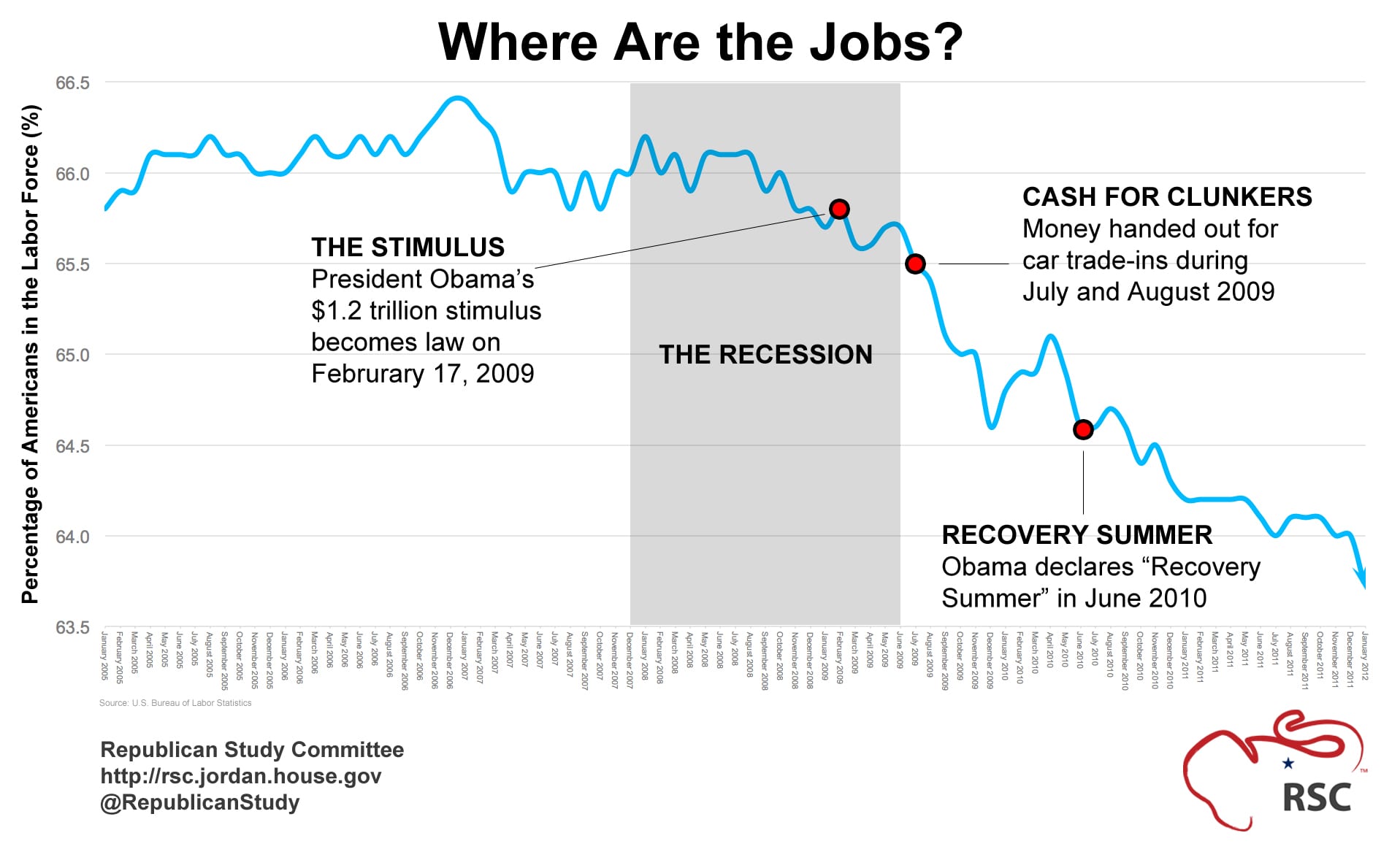
Where are the jobs?

Instapundit