Sunday, June 14, 2015

Why Are Africans Immigrating To “White Supremacy”?

Via Ryan


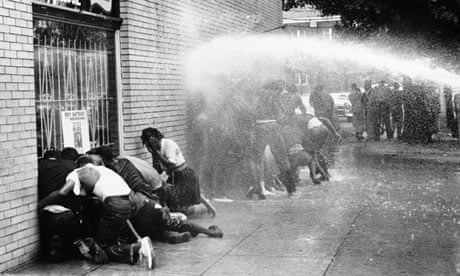
What image comes into your mind when you hear the phrase “white supremacy”? If you are a modern American, well-socialized into the current reigning ideology, the image is probably an old monochrome news picture from the Civil Rights era featuring leering white cops assaulting helpless blacks with billy clubs, attack dogs, or fire hoses.

For non-Americans of the modern West the image might be from some different event—the Sharpeville massacre, perhaps—but the content is essentially the same: white people being beastly to blacks.

If your cognitive reflexes come with audio accompaniment, you might hear the strains of some ditty from that same era: Bob Dylan’s “Oxford Town” (1963), maybe:

More @ VDARE

WWII: Principles of International Justice Left in Ruins


In his 1944 book, Bombing Vindicated, former Principal Secretary of the Air Ministry J.M. Spaight, revealed that on May 11, 1940 the British government had commenced unrestricted bombing of German cities, known as “The Splendid Decision,” to which the Germans responded in kind. Spaight traces this decision to 1936 when Bomber Command was organized, with “the whole raison d’ etre of Bomber Command was to bomb Germany should she be our enemy.” Visiting Germany as a military observer during the Franco-Prussian War, General Philip Sheridan, known for his brutal devastation of Americans in the Shenandoah Valley, was surprised that the Germans did not starve and torch their French enemies. By 1940, they had learned Sheridan’s lesson.
Bernhard Thuersam, www.Circa1865.com

Principles of International Justice Left in Ruins

“Nothing better illustrates how hell may be paved by good intentions which crumble than the war-crimes trials themselves. No doubt many who supported them were motivated by primitive Mongol demands for the massacre of defeated enemies, by “scientific” Marxian precepts which called for the liquidation of elements that could not be assimilated into a proletarian and totalitarian society, and by a purely vindictive desire for revenge.

On the other hand, many sincerely believed that the trial and punishment of men, many of whom had certainly been guilty of ordering or permitting unspeakable and boundless cruelties, would both reduce the prospect of future wars and make any that did take place more humane and restrained. During the Second World war, even Germany and Russia, despite their mass butcheries in the war in the East, refrained from using such lethal weapons, already in plentiful reserve, as poison gas and disease germs, for fear of possible retaliation.

The war-trials, by making it crystal clear that the losers will, henceforth, be subjected to such trials, regarded as aggressors whether they were or not (it was not emphasized at Nurnberg that England and France declared war on Germany), and be hanged or subjected to long prison terms, whether guilty as charged or not, made it inevitable that all the restraints that survived the Second world war would be thrown to the winds in the third – as even the limited war in Korea has demonstrated.

Since nothing worse can happen to a national war leader than to be disgraced, tortured and hanged, if defeated, there is no logical psychological reason for failing to throw in everything which may promise victory, however lethal and barbarous.

By 1952, the only belief of the early post-war years which still survived more or less unshaken was the belief that the Second World War had at least resulted in the establishment of new international standards of justice. As we have seen, as late as March 1951, the then British attorney-general, Sir Hartley Shawcross, was able, without making himself ridiculous, to put forward a moving appeal that what he called the principles of international justice established at Nurnberg should not be undermined for purposes of political expediency.

This comforting belief remained unshaken until it was reported in July 1952, that the Chinese Communists had indicated an intention to subject in due course certain of their prisoners of war captured in the Korean campaign to war-trials carried out “in accordance with the principles established by the international military tribunals of Nurnberg and Tokyo.”

In thousands of homes on both sides of the Atlantic the matter ceased to be an academic problem whether certain more or less worthy or unworthy foreigners had been unjustly condemned a few years before.

The anxious relatives of the British and American soldiers, sailors and airmen serving in Korea – and of those in the armed forces who might later be called upon to serve in Korea – had no difficulty in foreseeing what would be the result of war-trials carried out “in accordance with the Nurnberg principles.” All the illusions on this subject instantly vanished.

What may be regarded as the obituary notice of the Nurnberg war-trials was pronounced by Ex-Lord Chancellor Maugham in a letter to the London Times of July 25, 1952. “The Nurnberg Tribunal,” declared Lord Maugham, “never purported to lay down “principles” for all mankind.”

Perhaps it was always an unreasonable hope that the British Air Ministry’s “Splendid Decision” of May 11, 1940, would result in the establishment of any principles. The eighteen Whitley bombers which left England on that memorable spring night, in what now seems the remote past, did not set forth to establish principles.

The bombs which they dropped in the darkness on the countryside of Westphalia may, indeed, by chance have hit railway installations. Perhaps it is best to regard this historic air raid as a symbolic act, unconnected with corpses or debris, which left behind it in ruins nothing more substantial than the principles of civilized warfare that had been established in Europe for over two hundred years.

Similarly, the war-trials which were the outcome of that perhaps equally splendid decision taken at the Tehran Conference in 1943, did not, as we are now informed, lead to the establishment of any new principles of justice. Perhaps some day it may become generally agreed that, without establishing any new principles of justice, the war-trials actually left in ruins the principles of justice which had been accepted without question by all civilized peoples for many centuries.

Indiscriminate bombing invincibly linked warfare with barbaric military practices and ghastly mortality. All this would be intensified by the extensive use of guided missiles in later wars. The war-crimes trials at Nurnberg, Tokyo and elsewhere linked postwar procedures with juristic barbarism and made mandatory the utilization of the most savage methods of warfare in order to avert defeat and judicial lynching.”

(Advance to Barbarism, F.J.P. Veale, C.C. Nelson Publishing Company, 1953, pp. 293-297)

Louisville Kentucky – Video of Police Shooting As Officer Attacked By Thug With Flagpole…


Fortunately, this time there was CCTV video.  Louisville is one of the PC zones where Black Grievance propaganda thrives.   In 2014 the Louisville community was held hostage by mobs of “black teens”.  The political correctness was so extreme the FBI was dispatched to aid the city because the local authority, Mayor and Police Chief, claimed they could do nothing to protect the public from the mobs.  

The FBI even issued domestic terrorist warnings due to the violence being coordinated on social media.  People were dragged from their vehicles and beaten as the mob ruled the streets for several weekends.  Described as “the Purge in real life“.

LOUISVILLE (WHAS11) — One man is dead and a Metro Police officer is on administrative leave following a shooting Saturday afternoon. LMPD Chief Steve Conrad said the officer, who he did not identify, was responding to a report of a woman assaulted in the 300 block of West Oak St. The officer saw a man matching the suspect description and approached him, said Conrad.

Moments later the officer fired two shots at the man. He was taken to University Hospital where he died from his injuries. Conrad said the officer shot the man twice in self-defense because he tried to attack the officer with a flag pole.

NC: U.S. Two Teens Mauled in Separate Shark Attacks at Oak Island Beach

Via comment by Anonymous on Governor Nikki Haley makes South Carolina the firs...

 Official: 2 shark attacks seriously injure teens in Oak Island


Two teenagers were mauled in separate shark attacks on the same stretch of North Carolina beach today, local officials said. 

A teenage girl lost a part of her arm when she was bitten by a shark in an attack that occurred around 4 p.m. in Oak Island, a beach about 30 miles south of Wilmington, according to Brunswick County officials. 

The girl lost part of her left arm and may lose her left leg, Oak Island Mayor Betty Wallace said in a Facebook post. She been airlifted to New Hanover Hospital in Wilmington, Wallace said.


Less than two hours later a 16-year-old boy was attacked in the same area, and Wallace said he may have lost his arm. 

These incidents occurred just 30 miles up the coast from Ocean Isle Beach, where a 13-year-old girl was bitten by a shark on Thursday. The teen suffered lacerations on her foot, but was not severely injured. 13-Year-Old Injured After Reported Shark Attack in North Carolina

Was Jefferson a Conservative? Liberty Classroom Sample


In a lecture much broader than this title, Prof. Jason Jewell sets the stage for his new course, "The History of Conservatism and Libertarianism."
Check it out: http://bit.ly/JewellCourse

Liberty Classroom: http://www.LibertyClassroom.com/about

For homeschoolers: http://www.RonPaulHomeschool.com

My daily libertarian podcast: http://www.TomWoods.com

My latest book: http://www.RealDissent.com

My free eBook, 14 Hard Questions for Libertarians--Answered: http://bit.ly/14HardQuestions

Is California's Bear Flag comparable to the Confederate Flag? National opinion roundup

Via Billy

640px-Flag-of-California.jpg

It's a busy world beyond the borders of Alabama so, each Sunday, we'll bring you some of the most interesting stories being discussed in national opinion pages. What did you read today that sparked your interest? Let us know in the comments.

104 years ago a state adopted a flag that represented the legacy of generations of slave owners, murderers, thieves, drunks and squatters. The flag, though often controversial, has become a beloved symbol of regional pride and, now, has come under fire by the media.

Surprise! The flag is California's Bear Flag – Alex Abella has the untold story of the infamous flag. It appears that fierce debate over a regional flag isn't just a Southern phenomenon.

When did it become fashionable for politicians to publicly share their religion?

More @ AL

"The USS Shameless Cynicism."

Via Skynet

 http://i.imgur.com/Ic6Iw.jpg


USS Gabrielle Giffords

Naming controversy

Some commentators disputed the decision to name the ship after Giffords, with two retired U.S. Navy and U.S. Marine Corps officers criticizing the trend of naming ships for political reasons[8] while military blogger Spencer Ackerman called it "The USS Shameless Cynicism."[9] In response, some commentators have noted that several ships in the US Navy, including Henry M. Jackson, Carl Vinson, John C. Stennis, Ronald Reagan, and George Bush were named for prominent politicians who were still alive at the time of the naming, and that the still-active Carl Vinson was named for a congressman responsible for barring women from combat roles in the Navy for nearly 50 years, although unlike those other politicians, Giffords had not played a long and prominent role in the area of national defense.[10][11]

Endlessly Contemplating the Past on the Front Porch

 https://i.warosu.org/data/ck/img/0053/76/1398161935201.jpg

The years after 1865 saw the family as the core of Southern society and “within its bounds everything worthwhile took place.” Even in the early twentieth century Southerners working in exile up North imported corn meal and cured hams, and missed the North Carolina home where “Aunt Nancy still measures by hand and taste,” and where “the art of cooking famous old dishes lives on.”
Bernhard Thuersam, www.Circa1865.com

Endlessly Contemplating the Past on the Front Porch

“The governing families [of the South] . . . possessed modesty and good breeding in ample measure; much informal geniality without familiarity; a marked social distinction that was neither deliberate nor self-conscious. Indeed, the best families in the South were the most delightful segment of the American elite.

Southern charm reached its culmination in the Southern lady, a creature who, like her plantation grandmother, could be feminine and decorative without sacrificing any privileges except the masculine prerogative to hold public office. Count Hermann Keyserling in 1929 was impressed by “that lovely type of woman called “The Southern Girl,” who, in his opinion, possessed the subtle virtues of the French lady.

What at times appeared to be ignorance, vanity or hypocrisy, frequently turned out to be the innate politeness of the Southerner who sought to put others at ease.

To a greater degree than other Americans, Southerners practiced what may be regarded as the essence of good manners: the idea that the outward form of inherited or imposed ideals should be maintained regardless of what went on behind the scenes. Southern ideals were more extensive and inflexible than those prevailing elsewhere in America. To the rigid code of plantation days was added, in the late nineteenth and early twentieth centuries, the repressions of puritanism imposed by the Protestant clergy, who demanded that the fiddle be silenced and strong drink eschewed “on pain of ruin in this world and damnation in the next.”

Although Southerners were among the hardest drinkers in America, one reason they voted for Al Smith in 1928 was because he openly defended drinking. Many critics called this attitude hypocrisy, even deceit; the Southerners, however, insisted upon making the distinction between hedonistic tendencies and long-established ideals. If such evasiveness did not create a perfect code of morals, at least it helped to repress the indecent.

The home in the twentieth century remained the core of a social conservatism fundamentally Southern, still harboring “the tenacious clan loyalty that was so mighty a cohesive force in colonial society.” A living symbol of the prevailing domestic stability was the front porch where, in the leisure of the rocking chair, the Southerner endlessly contemplated the past. Here nothing important had happened since the Civil War, except that the screen of trees and banisters had grown more protective.

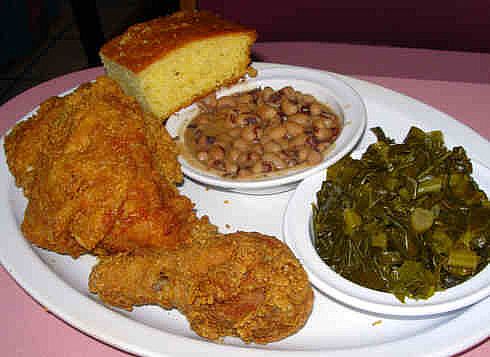
The most obvious indication of the tenacity of home life was the survival of the Southern style of cooking. Assaults upon it came from the outside, with scientists claiming that monotony and lack of balance in the eating habits of millions resulted in such diseases as pellagra.

National advertising imposed Northern food products upon those Southerners who would heed. Federal subsidies after 1914 enabled home economics to carry the new science of nutrition into Southern communities and schools. Yet no revolution in diet took place. Possibly, the . . . teachers overstepped . . . when they sought to introduce the culinary customs of Battle Creek and Boston. Their attempted revolution failed for the same reason as that of the Yankee schoolma’ams during Reconstruction.”

(The South Old and New, A History 1820-1947, Francis Butler Simkins, Alfred A. Knopf, excerpts pp. 292-295)

Lincoln’s Instrument of Subjugation

 http://quotes.lifehack.org/media/quotes/quote-Harriet-Ann-Jacobs-i-was-born-a-slave-but-i-19919.png

Lincoln was not the first to invoke an emancipation of slaves in the South for the purpose of carrying off his enemy’s agricultural labor and inciting a bloody race war – Virginia’s Royal Governor Lord Dunmore did this in 1775 and Rear Admiral Sir Alexander Cochrane the same in 1814. As enlistments for his war machine had virtually ceased after the carnage of 1862, Lincoln saw more blue-clad troops in slaves carried off from their Southern plantation homes.
Bernhard Thuersam, www.Circa1865.com

Lincoln’s Instrument of Subjugation

“Lincoln had laid aside his [emancipation] proclamation waiting for a victory. He waited two months, meanwhile giving out public statements based on his previous noncommittal attitude [regarding African slavery]; then on September 22, after Lee’s invasion had been foiled at [Sharpsburg], he issued the preliminary proclamation.

That this proclamation was far from an abolition document is shown by a careful reading of its provisions. The President began by reiterating that the purpose of the war was the restoration of the Union and reaffirming his intention still to labor for compensated emancipation. He then declared that on January 1, 1863, slaves in rebellious States should be “then, thenceforward, and forever free” . . .

The proclamation was not expressive of any general antislavery policy. On January 1, 1863, the definitive proclamation was issued, its chief provision being that in regions then designated as “in rebellion,” (with certain notable exceptions) all slaves were declared free. [But] the stereotyped picture of the emancipator suddenly striking the shackles from millions of slaves by a stroke of the presidential pen is altogether inaccurate.

The whole State of Tennessee was omitted [from the proclamation]; none of the Union slave States was included; and there were important exceptions as to portions of Virginia and Louisiana, those being portions within Union military lines. In fact freedom was decreed only in regions then under Confederate control.

“The President has purposely made the proclamation inoperative [declared the New York World] in all places where we have gained a military footing which makes the slaves accessible. He has proclaimed emancipation only where he has notoriously no power to execute it. The exemption of the accessible parts of Louisiana, Tennessee and Virginia renders the proclamation not merely futile, but ridiculous.

The proclamation is issued as a war measure, as an instrument for the subjugation of the rebels. But that cannot be a means of military success which presupposes this same . . . success as the condition of its own existence . . . A war measure it clearly is not, inasmuch as the previous success of the war is the thing that can give it validity.”

“We show our sympathy with slavery, [Secretary of State William] Seward is reported to have said, “by emancipating slaves where we cannot reach them and holding them in bondage where we can set them free.”

The London Spectator declared (October 11, 1862): “The government liberates the enemy’s slaves as it would the enemy’s cattle, simply to weaken them in the . . . conflict . . . The principle is not that a human being cannot justify owning another, but that he cannot own him unless he is loyal to the United States.”

Earl Russell in England declared: “The Proclamation . . . appears to be of a very strange nature. It professes to emancipate all slaves in places where the United States authorities cannot exercise any jurisdiction . . . but it does not decree emancipation . . . in any States, or parts of States, occupied by federal troops . . . and where, therefore, emancipation . . . might have been carried into effect . . . There seems to be no declaration of a principle adverse to slavery in this proclamation.”

It will be noted that Lincoln justified his act as a measure of war. To uphold his view would be to maintain that the freeing of enemy slaves was a legitimate weapon of war to be wielded by the President . . . [and] in the new attitude toward slavery which the war produced [in the North] it was natural to find considerable support for the view that slavery was a legitimate target o the war power [of the President]; but it is a matter of plain history that prior to the Civil War the United States had emphatically denied the “belligerent right” of emancipation.

Indeed, John Quincy Adams, who has been credited by his grandson [Charles Francis Adams] with having originated the idea of the emancipation proclamation, declared officially while secretary of state in 1820 that “No such right [emancipation of slaves] is acknowledged as a Law of War by writers who admit any limitation.”

To Lincoln’s mind the war emergency justified things normally unconstitutional. “I felt that measures otherwise unconstitutional,” he said, “might become lawful by becoming indispensible to the preservation of the Constitution through the preservation of the nation.”

(The Civil War and Reconstruction, J.G. Randall, D.C. Heath and Company, 1937, pp. 489-493)

Jahda and Marvin Bakari – The Activism Behind The McKinney Pool Party Narrative

 Jahda and Marvin Bakari - Pool Party

In a video interview, following the chaos of the Craig Ranch pool party, Mr. Marvin Bakari and his 13-year-old daughter Jahda Bakari took to the airwaves to make a very specific series of claims.

If you were to follow the construct of the racial narrative espoused by the activists around the Craig Ranch incident, you will find the media delivered “RACISM” story originates specifically from Marvin Bakari and his daughter Jahda.  No-one claimed any racial tones to the events until Marvin Bakari stepped forward claiming racism.

This is important because the Black Lives Matter national activists flocked to the neighborhood based in large measure on the claims of the Bakari’s.


One of the first things Marvin Bakari did was to start a Fundraising effort with a goal of $6,000.  Within moments of his setting up the fundraising we noticed it because we were deep into research for the truth behind what happened at “Craig Ranch“.

Initially it seemed curious to see a fundraiser being broadcast by the professional Black Grievance Industry (BGI) within 36 hours of a controversial story; before the actual facts behind the events even surfaced.

More with video @ The Last Refuge