Thursday, July 27, 2017

Dunkirk: Three Highly Unlikely Events Converged At Exactly The Right Time To Save The English

Via Carl

 Hitler with the Battle of Dunkirk footage


 *********************************

Christopher Nolan’s Dunkirk opened last Friday to massive crowds and rave reviews. By the end of the weekend, the movie had grossed more than $100 million worldwide; $24 of which came from my wife and me. Dunkirk, in my opinion, is an entertaining film and a fine diversion, but entirely underwhelming and a missed opportunity.

Dunkirk is everything you’d expect from 21st-century Hollywood. There’s plenty of action, some epic panoramas, and more than one plotline crafted to tug the heartstrings. Add in (another) superb score from Hans Zimmer, and Dunkirk is everything Hollywood tells us we want. But although it is viscerally stimulating, Dunkirk lacks depth, meaning and substance. There’s no historical context, nothing to stimulate or challenge the intellect, nothing meaningful to take away. For a film so obviously connected to an explicit historical event, there is a surprising dearth of history. May 1940 was arguably the most important month of World War ii, one that included other momentous developments. Yet Dunkirk somehow fails to explore the broader significance of the rescue of more than 330,000 Allied soldiers, and it fails to convey, even faintly, the colossal stakes of Operation Dynamo for Britain, France, Germany and, indeed, humanity.

The biggest disappointment, and the least surprising, was the failure to highlight the miracles that surrounded Operation Dynamo. For me, Dunkirk ranks in the top five on the list of Britain’s all-time greatest miracles. The most incredible facet of Dunkirk doesn’t relate to one event. Rather, it’s the fact that three highly unlikely events converged at exactly the right time.

Aeronautical Science Degree

Via Wes
Image result for fred reed

"A measure of the fairyland world of American politics is that a criminal, killed attempting to beat a security officer to death, should solemnly be awarded a posthumous degree in something he probably could not spell". --FRED REED

On-line Exchange Shopping: Free Shipping and No Tax


O, what a tangled web we weave when first we practise to deceive! A top FBI lawyer is allegedly under an investigation for leaking classified information to the media

Via Billy


Baker is a close confidant of former FBI Director James Comey, and recent media reports suggested he was reportedly advising the then-FBI director on legal matters following private meetings the former director had in February with President Trump in the Oval Office. 

FBI General Counsel James A. Baker is purportedly under a Department of Justice criminal investigation for allegedly leaking classified national security information to the media, according to multiple government officials close to the probe who spoke with Circa on the condition of anonymity.

FBI spokeswoman Carol Cratty said the bureau would not comment on Baker and would not confirm or deny any investigation.

This comes as Department of Justice Attorney General Jeff Sessions said he would soon be making an announcement regarding the progress of leak investigations. A DOJ official declined to comment on Circa’s inquiry into Baker but did say, the planned announcement by Sessions is part of the overall "stepped up efforts on leak investigations."

More @ Circa

Awan Brothers Helped Wasserman Schultz Take Out Bernie - Make Disguised Calls

Via Billy


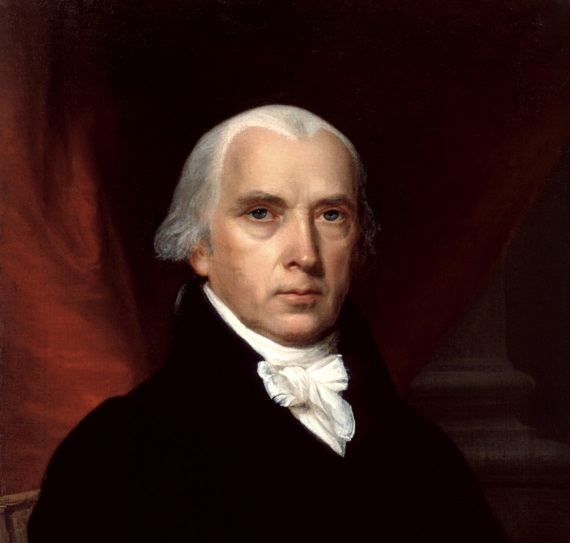
Madisonian Nullification


This article will restore necessary context to the word “nullification” as used by James Madison in an 1834 letter called “Notes on Nullification.”

First, we have to put Madison’s role in the formulation of the concept of nullification into some context of its own.

As indispensable as he was to the development of our Constitution, James Madison is not the father of nullification. The idea that a smaller division (a state, a county, a city, etc.) is justified — even obliged — in refusing to obey unlawful edicts of the larger society (the federal government, in the case of the United States) was not original to Madison, Jefferson, or any of America’s Founding Fathers. The doctrine we call nullification was known for generations before the Kentucky and Virginia Resolutions were written.

Our Founders drew wisdom and inspiration from a variety of sources, including a group of continental natural law theorists, one of whom was Samuel Pufendorf of Germany (read of the importance of Pufendorf to the Founders here).

Censorship and Favorable Publicity

 http://www.nybooks.com/wp-content/uploads/2014/10/wills_1-110614.jpg

Prior to 1861, the New York Associated Press was playing an important role in transforming American journalism by centralizing a network of like-minded newspapers to distribute news to the country. After commencing hostilities, the Lincoln administration began censoring news stories regarding the war almost immediately and what followed was a constant suppression of stories regarding war financing in Congress, the imminent bankruptcy of the government, Northern casualties figures, and war profiteering by war materiel contractors.
Bernhard Thuersam, www.Circa1865.com   The Great American Political Divide

Censorship and Favorable Publicity

“At the outset of the Civil War – and for the first time in American history – the federal government created an apparatus to censor news stories. For the first ten months of the war, responsibility for the Washington censorship shifted among cabinet officials. Given this arrangement, the censorship imposed on correspondents during the crucial early phase of the conflict was as much political as military.

In December 1861, the House of Representatives authorized the Judiciary Committee “to inquire if a telegraphic censorship of the press has been established in this city; if so, by whose authority, and by whom is it now controlled.” The committee held hearings during January and February before submitting its fourteen-page report to the House in February 1862.

On April 19 . . . reporters gathered details from the battered [6th Massachusetts Regiment returning from Baltimore] and hurried to the Washington telegraph office to file their stories for Northern newspapers. When they arrived, however, they found the office guarded by a militia squad . . . no one quite accepted responsibility for the decision to ban the transmission of news, though [William] Seward mentioned that the cabinet had been discussing the need for some type of telegraphic censorship.

[News organization owners were told that] Messages about military operations were to be detained, as was anything “injurious to the interest of the Government.” The circular closed with the admonition, “Of course the strictest secrecy must be observed in respect to these instructions.” Near the end of April, the War Department assumed control of the telegraph and the censorship program.

Telegraphic reports about the outcome of [First Manassas] on July 21 damaged the credibility of both the government and the press and prompted changes in censorship. Early accounts of the battle telegraphed to Northern newspapers suggested an imminent Union victory . . . [and] left the public unprepared for the news that followed: the battle ended in an ignominious rout of the Union army.

Only days after Gen. George B. McClellan assumed command of the Army of the Potomac, he met with reporters and proposed a code that governed news sent by telegraph . . . “that may furnish aid and comfort to the enemy.” Eleven correspondents representing leading newspapers in New York, Philadelphia, Boston, Cincinnati, and Washington signed, as did General McClellan.

The ultimate arbiter of what could pass over the wires from Washington, Secretary of War Simon Cameron, was well-positioned to cultivate favorable publicity. He directed the censor to let the “despatches of Mr. [Samuel] Wilkeson, of the New York Tribune, go over the wires as written . . . as Wilkeson enjoyed the latitude to offer comments, even editorialize, in his reports from Washington. “The privilege was to be used wholly in [reference] to the policy of sustaining the govt – sustaining the War Dept.,” Wilkeson testified.

Wilkeson’s reports to the Tribune regularly defended Cameron and the War Department from the many charges of scandal and mismanagement in awarding military contracts.”

(The Telegraph, Censorship and Politics; Richard B. Kielbowicz, Civil War History, Vol. XL, 1994, Kent State University Press, excerpts, pp. 96-101)

Heroes for All Americans

 https://s-media-cache-ak0.pinimg.com/736x/5b/07/ae/5b07aec60203483a83ecb0f9e2f200fe.jpg

The mid-1970s pardons of Robert E. Lee and Jefferson were only symbolic gestures that had little impact beyond political posturing, though the outpouring of respect and veneration of these great American leaders showed an America still exhibiting historical perspective. This was the same era that historian Emil Eisenschiml revisited the long-overlooked plot of Edwin Stanton’s Radical Republican’s plotting Lincoln’s death.
Bernhard Thuersam, www.Circa1865.com   The Great American Political Divide

Heroes for All Americans

“In August 1975, President Gerald Ford signed Senate Joint Resolution 23 restoring full citizenship rights to Robert E. Lee. Three years later, President Jimmy Carter approved congressional action extending similar amnesty to Jefferson Davis.

A generation following Appomattox, “Marse Robert” had eclipsed all other Confederate rivals, becoming the region’s most celebrated hero. Theodore Roosevelt praised the Confederacy’s greatest general as a hero for all Americans. In the mid-1920s Congress heartily endorsed the refurbishing of the Custis-Lee mansion, naming the home a national shrine. Author Douglas Hall] Freeman painted a portrait of Lee as an individual beyond reproach in all respects of his public and private life.

After World War II . . . A host of symbolic measures indicated his status as a national hero: Virginia’s placement of a statue of the general in the Capitol building; the hanging of Lee’s portrait in the main reading room of the West Point Library; the christening of the nuclear-powered submarine the Robert E. Lee; and the opening of America’s centennial celebration of the Civil War with separate ceremonies at Grant’s and Lee’s tombs.

[The] intensity with which the general was venerated, especially in the South, made any criticism of him risky business. President Dwight Eisenhower learned this fact the hard way. In May, 1957, Ike visited the Gettysburg battlefield in the company of Field Marshal Bernard Montgomery. After their tour, the World War II heroes told reporters that both Meade and Lee deserved to be sacked for the errors they had committed at Gettysburg.

Senator Olin Johnson of South Carolina indignantly responded to Ike’s blasphemy” “It is offensive to my people to listen to a general who had at his disposal in his day the most wealth, men, materials of war, and the largest army, navy and air force in history, and hear him criticize a great Confederate general who, despite poverty, starvation, a ragged army, and practically no navy or munitions, managed to hold off and even invade the territory of the industrialized, wealthy, well-fed Yankees.”

Senator Harry Byrd, Sr. of Virginia . . . observed that “Lee needs no defense . . . his glorious record, his noble character, and his moral leadership give him a place in world history that no one can impair.” An editorial in the Washington Evening Star called the president’s post-tour comments a major setback for Republican efforts to woo votes in Dixie . . . “

[Senator Hubert] Humphrey of Minnesota melodramatically seconded a pardon: “I know I am what one would call a Yankee, but I am more than that: I am an American. One great American was Robert E. Lee.”

Shortly after Carter’s election, Senator Mark Hatfield [of Oregon] introduced in the Senate a bill “to restore Posthumously Citizenship to Jefferson F. Davis.” In lengthy remarks, Hatfield [stated that] the Confederate leader was “an honest public servant of principle the like of which is all too rare in these days when expedience is more ardently practiced than conviction defended.” Hatfield claimed that his resolution would “correct a grave injustice inflicted upon Davis by a vindictive conqueror.”

(Reconstruction in the Wake of Vietnam; The Pardoning of Robert E. Lee and Jefferson Davis, Francis MacDonnell, Civil War History, Vol. XL, 1994, Kent State University Press, excerpts, pp. 127-130)

Removing Robert E. Lee’s Statue Oversimplifies History

Via Billy

Robert E. Lee statue (Shutterstock/MGS)

In the 2008 film Valkyrie, Tom Cruise plays Colonel Claus von Stauffenberg, a German army colonel who played a key part in a plot to assassinate Adolf Hitler. The film is a solid portrayal of a fascinating real life story. Hitler had every intention of fighting the war to the end and the colonel feared Hitler’s “never surrender” attitude would bring about the destruction of the German homeland. Although Stauffenberg was in the German army during the country’s worst years, and even participated in the the invasion of Poland most viewers  of the film––not to mention students of history––would agree that Stauffenberg is a hero despite past sins.

Like the colonel-turned-assassin, Robert E. Lee has been viewed by many Americans as an unlikely hero for the past 150 years. The Virginia slaveholder felt torn at the onset of the Civil War, writing years later that, “though [I was] opposed to secession and deprecating war, I could take no part in an invasion of the Southern states.” As for slavery, the other issue generally seen as the cause of the war, Lee ultimately chose his homestate of Virginia over the Union. Upon hearing word of Virginia’s formal secession, he resigned from the U.S. Army and joined the state  militia, fighting for the Confederate States of America until his surrender to General Ulysses S. Grant at Appomattox Courthouse in 1865. After the Civil War ended, however, Lee became a leading figure in support of healing the wounds of the country. He always had qualms with secession and there is compelling evidence that he believed the institution of slavery to be morally reprehensible, calling it “a moral and political evil.” Thus, the slave-holding Confederate general turned a page in his life after surrendering at Appomattox, and dedicated himself to re-engaging with the North to promote sectional unity.

White House calls for ‘thorough investigation’ of Debbie Wasserman Schultz staffer scandal

Via Billy

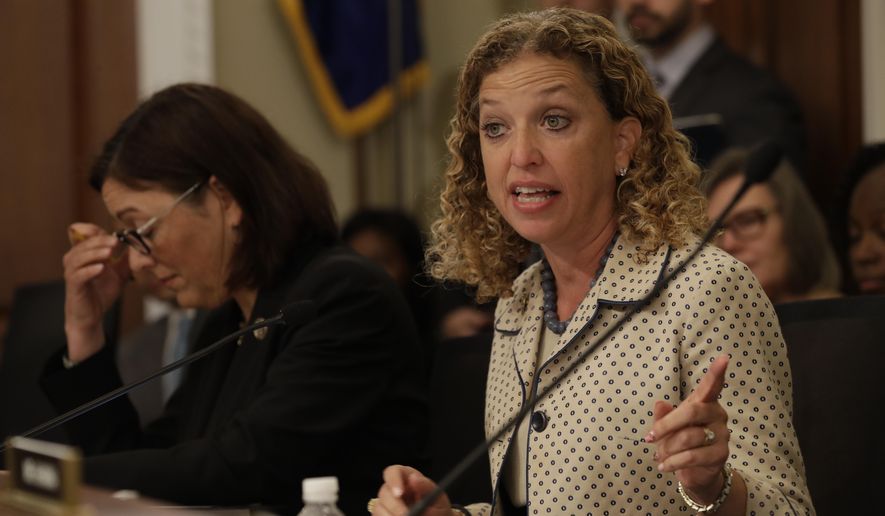
In this May 24, 2017, file photo, House Budget Committee member Rep. Debbie Wasserman Schultz, D-Fla., questions Budget Director Mick Mulvaney on Capitol Hill in Washington during the committee's hearing on President Donald Trump's fiscal 2018 federal budget. Fellow committee member Rep. Susan DelBene, D-Wash. is at left. Wasserman Schultz fired IT staffer Irman Awan on July 25, 2017, following his arrest on a federal bank fraud charge. (AP Photo/Jacquelyn Martin, File)

The White House called Thursday for a thorough investigation related to the arrest of an IT staffer for Rep. Debbie Wasserman Schultz who remained on the job and with congressional computer access for about five months after FBI began investigating him for fraud.

“I do think it is something we should fully look into and there should be a thorough investigation,” said White House press secretary Sarah Huckabee Sanders.

Mrs. Wasserman Schultz, former chairwoman of the Democratic National Committee, fired the staffer, Pakistan-born Imran Awan, after he was arrested Monday at Dulles Airport outside Washington trying to flee the country.

The Florida congresswoman also told investigators there would be “consequences” if Mr Awan’s laptop seized by police was not promptly returned to her office.

Mr. Awan, 37, pleaded not guilty to a charge of bank fraud and was released on strict conditions that he wear a GPS monitoring device and not travel more than 50 miles from his home in Lorton, Virginia.