Thursday, July 25, 2019

Here Are The First 5 People In Line for the First Federal Executions Since 2003

 Attorney General William Barr


Daniel Lewis Lee, a member of a white supremacist group, murdered a family of three, including an eight-year-old girl. After robbing and shooting the victims with a stun gun, Lee covered their heads with plastic bags, sealed the bags with duct tape, weighed down each victim with rocks, and threw the family of three into the Illinois bayou. On May 4, 1999, a jury in the U.S. District Court for the Eastern District of Arkansas found Lee guilty of numerous offenses, including three counts of murder in aid of racketeering, and he was sentenced to death. Lee's execution is scheduled to occur on Dec. 9, 2019.

Lezmond Mitchell stabbed to death a 63-year-old grandmother and forced her nine-year-old granddaughter to sit beside her lifeless body for a 30 to 40-mile drive. Mitchell then slit the girl's throat twice, crushed her head with 20-pound rocks, and severed and buried both victims' heads and hands. On May 8, 2003, a jury in the U.S. District Court for the District of Arizona found Mitchell guilty of numerous offenses, including first degree murder, felony murder, and carjacking resulting in murder, and he was sentenced to death. Mitchell's execution is scheduled to occur on Dec. 11, 2019.


Wesley Ira Purkey violently raped and murdered a 16-year-old girl, and then dismembered, burned, and dumped the young girl's body in a septic pond. He also was convicted in state court for using a claw hammer to bludgeon to death an 80-year-old woman who suffered from polio and walked with a cane. On Nov. 5, 2003, a jury in the U.S. District Court for the Western District of Missouri found Purkey guilty of kidnapping a child resulting in the child's death, and he was sentenced to death. Purkey's execution is scheduled to occur on Dec. 13, 2019.

Alfred Bourgeois physically and emotionally tortured, sexually molested, and then beat to death his two-and-a-half-year-old daughter. On March 16, 2004, a jury in the U.S. District Court for the Southern District of Texas found Bourgeois guilty of multiple offenses, including murder, and he was sentenced to death. Bourgeois' execution is scheduled to occur on Jan. 13, 2020.

Dustin Lee Honken shot and killed five people — two men who planned to testify against him and a single, working mother and her ten-year-old and six-year-old daughters. On Oct. 14, 2004, a jury in the U.S. District Court for the Northern District of Iowa found Honken guilty of numerous offenses, including five counts of murder during the course of a continuing criminal enterprise, and he was sentenced to death. Honken's execution is scheduled to occur on Jan. 15, 2020.

SÀI GÒN 6/4/75

Via Dung 

 Image may contain: 1 person, sitting and food
  
An American woman escort Vietnamese orphans to sign that there is still room to drive more children on the bus to take orphans to the airport on Sunday to land flight to the United States.

Vietnam Babylift, My Story


US justice department resumes use of death penalty and schedules five executions

Via Iver
 ‘We owe it to the victims and their families to carry forward the sentence imposed by our justice system,’ William Barr said.

William Barr announces he has reinstated a policy dormant for 16 years, following authorization from Congress and signing by Trump


The US government is set to carry out the death penalty for the first time in 16 years, William Barr, the attorney general, announced on Thursday, despite criticism of capital punishment as “immoral and deeply flawed”.

The justice department scheduled the execution of five death row federal inmates for December and January.

More @ The Guardian

Wednesday, July 24, 2019

The Streets of Cho Lon, as Seen Through Old Postcards


From downtown Saigon, take Tran Hung Dao Boulevard, drive past rows of towering dipterocarp trees, and one will arrive in the colorful quarters of Cho Lon.

While some buildings might be gone and packed residential neighborhoods have sprouted from empty fields, the route from Saigon to Cho Lon remains mostly unchanged from the early 20th century, when these postcards were taken. Saigon and Cho Lon were even separate towns back in the day, and to commute between the two, residents perched on bouncy horse-drawn carriages or took the Saigon-Cho Lon Tramway, now a relic that exists purely in photographs like the ones below.

Commerce-filled thoroughfares like Trieu Quang Phuc, Chau Van Liem and Tran Hung Dao made up the main arteries of Cho Lon, and still do today. Chinese merchants set up stores selling homemade food, spices, silk and other craft products, making the community the best place to shop until you dropped.

More @ Saigoneer

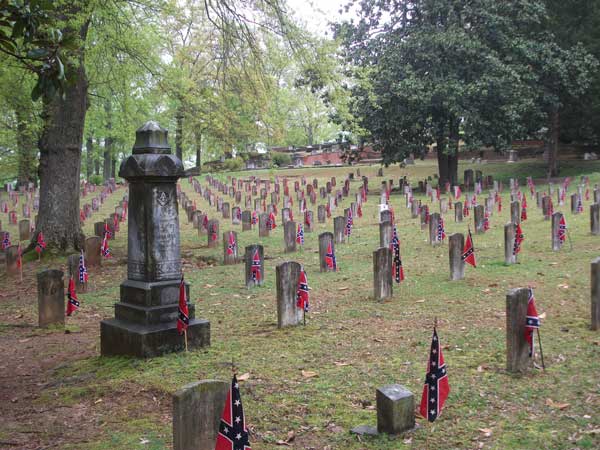
Allen Tate’s Confederate Ode: Who are the Living and the Dead?

 
 Then Lytle asked: Who are the dead?
 Who are the living and the dead?
Allen Tate, “The Oath”
Over the decades since its first publication in 1927 Allen Tate’s “Ode to the Confederate Dead” has probably received more critical and popular attention than any of his other poems.[i] Tate himself alludes to some of it in his own commentary on the work in “Narcissus as Narcissus.”[ii]  One critical approach, which Tate calls the “genetic,” asks where the poem comes from. Similarly, a curious type of psychological approach sees the poet as compensating somehow in his poetry for his less-than-adequate life. One such interpretation argues that Tate saw himself as a Confederate general but, lacking the means to be one, sought to “invent fictions about the personal ambitions that my society has no use for” (“Narcissus,” EFD, 594). On a more sober plain, there are critiques that treat various aspects of his poetry, such as its classical allusions—which are vital to this “Ode”—Tate’s sense of irony, his imagery, historicism, and so on.

The Barber of Natchez


Review of The Barber of Natchez (LSU, 1954, 1973) edited by Edwin Adams Davis and William Ransom Hogan.

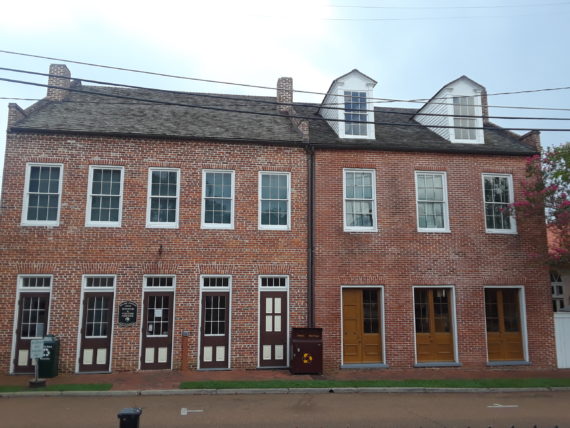
Author’s Note: In 1938 a trove of documents dating from 1793 -1937, “over 60 volumes of account books, “nearly 1400” financial and legal documents, bound and unbound volumes of “rare antebellum newspapers” including 2 editions unknown before, “over 400” sheets of 19th century music, “, innumerable personal and business letters … in a word, the entire known recollections of the family of William Johnson, were found unharmed, at rest in the attic of 210 State St, Natchez, Mississippi. Today it is a National Historic site. William Johnson built the home in 1840-41. He was a man of comfortable wealth and social status in Natchez. Among the organized clutter was Mr. Johnson’s daily diary, a singular monument to his intelligence and accomplishments. It detailed his bon vivre as a free Negro in our antebellum South.

Gun and Ammo laws for all 50 states & More


Kids: Chasing Paradise


Chris Wallace: 'This has been a disaster for the Democrats' and 'for the reputation of Robert Mueller'


"Fox News Sunday" anchor Chris Wallace called former special counsel Robert Mueller's testimony "a disaster for the Democrats" and "for the reputation of Robert Mueller" during a discussion on the network Wednesday morning, comments that were later retweeted by President Trump.

More @ The Hill

Justice Dept. Watchdog Has Evidence Comey Probed Trump, on the Sly


It is one of the most enduring and consequential mysteries of the Trump-Russia investigation: Why did former FBI Director James Comey refuse to say publicly what he was telling President Trump in private -- that Trump was not the target of an ongoing probe?

That refusal ignited a chain of events that has consumed Washington for more than two years – including Comey’s firing by Trump, the appointment of Special Counsel Robert Mueller, and ongoing claims that Trump obstructed justice.

The report of Inspector General Michael Horowitz is expected in September. Top photo: Then FBI Director James Comey shakes hands with the new President on Jan. 22, 2017.

Now an answer is emerging. Sources tell RealClearInvestigations that Justice Department Inspector General Michael Horowitz will soon file a report with evidence indicating that Comey was misleading the president. Even as he repeatedly assured Trump that he was not a target, the former director was secretly trying to build a conspiracy case against the president, while at times acting as an investigative agent.