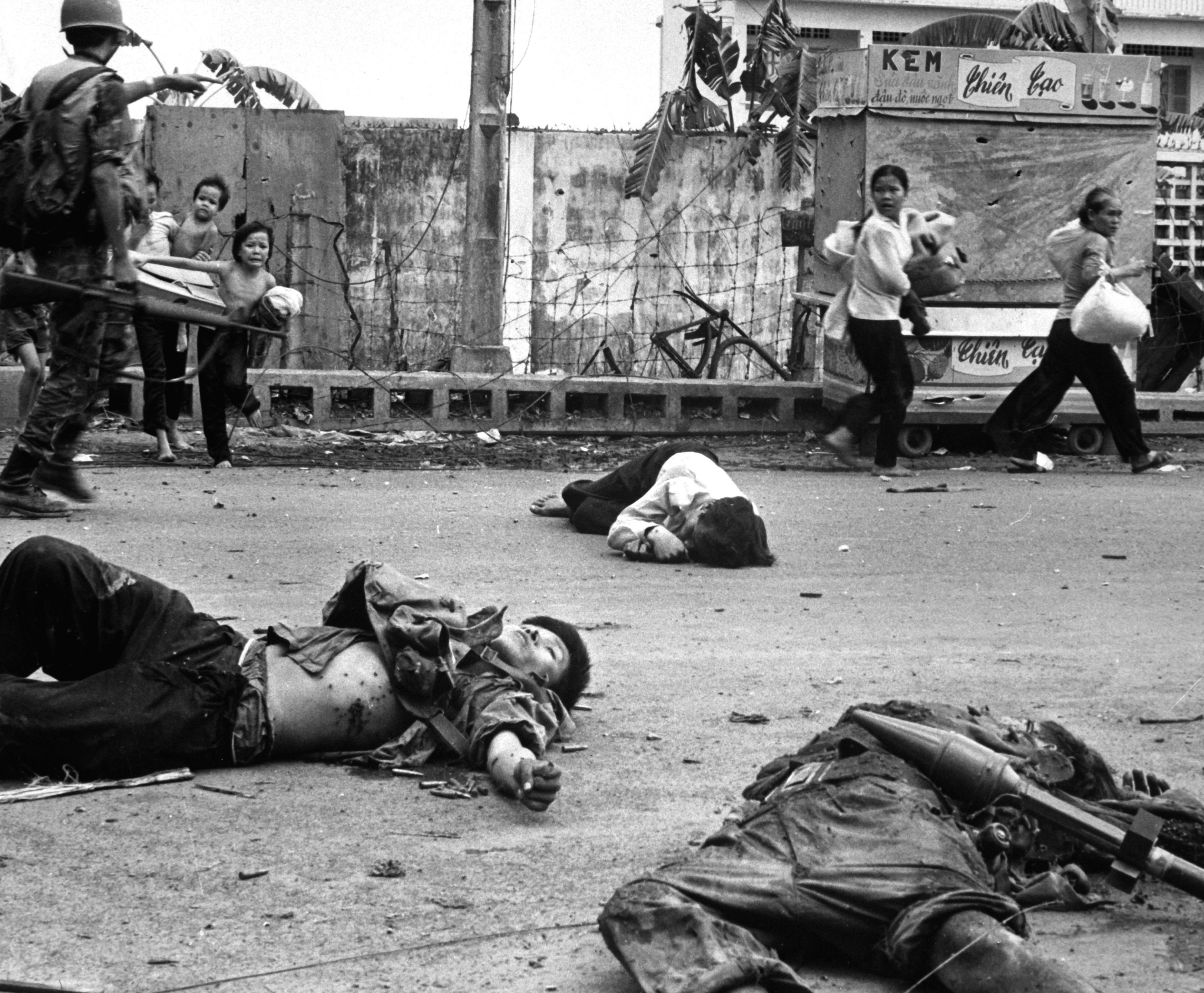
Two dead VC, not sure about the other.

A few minutes left to live. Payback's a bitch.


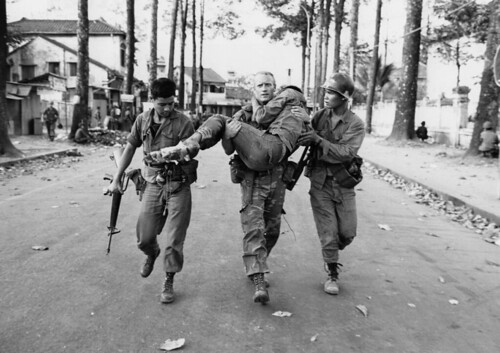


=========================
And finally, Miss Bitch



During the more than 20 years that the parents were married, the father was supportive of homeschooling the children. But, as is too often the case, when the couple divorced, the father wanted the children to be enrolled in public school so that their mother could enter the workforce. For three years, there was ongoing, stressful conflict between the parents about the children’s education until finally the mother succumbed to her ex-husband’s demands that she enroll the remaining children in public school. Unfortunately, because of all the upheaval during the last school year the children were homeschooled, the mother did not have standardized tests administered during the 2010–2011 school year as required by state law.
After a year of public school during which the mother said her “heart was ripped to shreds” as she watched her children’s experience, she determined to begin homeschooling again during the 2012–2013 school year. But her ex-husband had other plans. He filed a complaint with the North Carolina Division of Non-Public Education (DNPE), alleging that his children’s homeschool should be closed because of their mother’s failure to administer standardized tests during the 2010–2011 school year. In response, DNPE asked the mother to submit the test results for inspection. That’s when HSLDA got involved.
HSLDA Senior Counsel Dewitt Black sent a reply to DNPE on behalf of the mother and reminded officials that state law requires that the test records be made available for inspection for only one year after testing. Black pointed out that since the 2010–2011 school year ended on June 30, 2011, the test records for that year were subject to inspection only until June 30, 2012. DNPE did not request to see the records until August of this year. One week after receiving Black’s letter, DNPE dismissed the complaint against the mother.
This case is a reminder of how important it is to comply with state law even in the most difficult circumstances in order to avoid dealing with future problems. Fortunately for this family, the law also provided a way of escape.
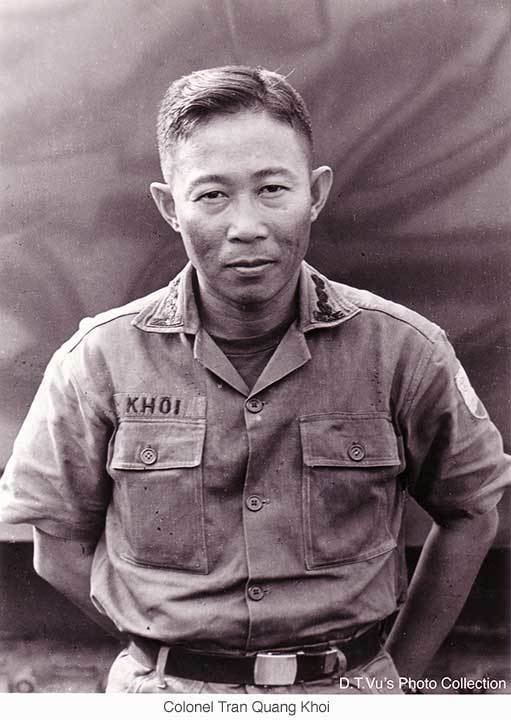
 Brigadier General Tran Quang Khoi graduated from the Vietnamese National Military Academy at Da Lat in 1952, the French Cavalry School at Saumur in 1955, and the U.S. Army Armor School at Fort Knox in 1959. As senior advisor to the Vietnamese Chief of Armor, I first met him in 1966 when he deployed the ARVN 5th Cavalry to Xuan Loc. I accompanied him on several operations to reconnoiter for the impending arrival of the U.S. 11th ACR. In May of 1966, he provided his 1/5 tank troop (M41A3) for airlift to Da Nang ("When Tanks Took Wings," ARMOR, May-June 1994). In early 1970, his combined-arms Task Force 318 spearheaded the U.S./VN incursion into Cambodia, earning his Corps CG the sobriquet "The Patton of the Parrot's Beak." In November 1970, he organized and trained III Armor Brigade and commanded it in Cambodia, both before and after attending the U.S. Army Command & General Staff College at Fort Leavenworth in 1972-3. In 1971-72, I frequently met him in places like An Loc and Loc Ninh as his brigade raced between flash points in Cambodia. Released from "Re-education Camp" after 17 years, he now resides in Springfield, VA. He is one of the finest Armor leaders I ever met; bold and daring, but not foolhardy, he knew full well how to use mobility and firepower to produce shock even in terrain like Vietnam's. He also had the imagination and flexibility to task-organize in such a way as to get the most from his available assets. Had Khoi been a tank battalion commander in Third Army during World War II, General Patton would have acknowledged two peers: Creighton Abrams and Tran Quang Khoi. RAYMOND R. BATTREALL COLONEL Armor (Ret)
PROLOGUE
At the end of Vietnam War, the ARVN fought the war alone at the most difficult situation due to short supplies in logistics and the US military disengagement; however the ARVN III Armor Brigade and the Assault Task Force (ATF) unit of the III Corps had mounted the last major military offensive, relieving successfully the siege of Duc Hue camp, annihilating the 5th Division of North Vietnamese Communist regular army in such a lightning, daring tactics. Unfortunately, this classic epic battle seemed to get lost in the political fog of phony Paris agreement at that time. The below article by Brigadier General Tran Quang Khoi will recall a humble part of that magnificent event. (vnafmamn.com)
By Brigadier General Tran Quang Khoi, ARVN
During the final days of the Vietnam War, I commanded the ARVN III Armor Brigade and III Corps Assault Task Force (ATF) throughout III Corps Tactical Zone and in defense of the City of Bien Hoa against the final Communist offensive in South Vietnam. For twenty years since the fall of South Vietnam on 30 April 1975, I have read many articles by both Communist and Free-World writers. Many of them are ambiguous or inexact, especially when referring to actions east of and in Bien Hoa. Some even distort the truth and wound the honor of III Armor Brigade/III Corps ATF, so I have an obligation to both the living and the dead to correct the record so as not to be ungrateful to the heroes who willingly followed me and fought to the very last minute of the war.
THE EARLY DAYS

Politicians are making a hash of this country—and much of the rest of the civilized world. We know it. They know it. They know we know it. But we don't feel we can do anything much to stop them.
That right there is the pre-condition for civil unrest—when people are frustrated and politicians are nervous.
Worse, that was how things stood before last fall's crash. Before pols on both left and right launched the biggest mass transfer of wealth in history—transferring our wealth (what we had left of it!) to their friends on Wall Street and in the banking industry. In other words, that's how things were before things got bad!
Now everybody's talking about the ongoing catastrophe (even if we are in a momentarily sunny mood). But almost nobody is talking about the logical—maybe even inevitable—consequences of cynical or desperate politicians abusing an already fed-up populace: civil unrest.
I mean people taking to the streets. Or mass resistance. Or crackdowns because the government fears we might do something to upset its apple cart. It's going to happen. Somewhere. At some time. It's going to.
One of the few VIPs to mention the matter openly was Zbigniew Brzezinski, former National Security Advisor and the ultimate insider's insider. He commented on the millions of unemployed or soon-to-be-unemployed and the "...public awareness of this extraordinary wealth that was transferred to a few individuals at levels without historical precedent in America." He told "Morning Joe" Scarborough, "Hell, there could be even riots."
I'd say that's an understatement.More @ Backwoods

The enemy fooled all of our high-tech gadgetry with training, observation, intelligence, terrain, planning, rehearsal, and audacity, using basic military tactics that were perfected long before anyone reading this was born.
Last Friday night, the moon phase left Afghanistan in near total darkness. Even with clear skies, the enemy knew that at the brightest moment, the moon would only appear as an irrelevant orange sliver. Such times are called “red illumination,” or “red illum.” Planning calendars in Afghanistan highlight periods of red illum because they hamper aviation.
Even though this is the year 2012, and the Curiosity Rover is beaming images from Mars more than four decades after astronauts first trod on the lunar surface, the moon phase remains important when planning operations. The moment that the nighttime attack on Camp Bastion was reported, the moon phase could have been safely guessed without looking up.
In every respect, Southern Afghanistan is a dark part of the world. Without moonlight, most villages are black at night. The brightest places in the country are our bases. Cultural lights present little danger to Taliban moving at night. Our air assets, including our aerostat balloons, are often their biggest concern.
This war is mature. The enemy knows us, and we know them. After 11 years, the Taliban realizes that most helicopter traffic ceases during red illum. Most birds will only fly for urgent MEDEVAC, or for special operations. The enemy closely observes our air traffic. Operations slow under red illum, so air traffic declines, and the chances of being spotted by roving aircraft are reduced.
More @ Michael Yon

For those of you who don’t know, Omar Abdel-Rahman, aka “the blind sheik”, is serving a life sentence in a federal prison for his role in planning the 1993 bombing of the World Trade Center. He is also viewed, unsurprisingly, as a religious leader in most of the Arab world.
Thomas Jocelyn of the Weekly Standard does a great job of connecting the dots and makes a compelling case that the sacking of US diplomatic facilities on September 11 was part of a larger effort to secure the release of Omar Abdel-Rahman.
Now we have reports that the Obama Administration is in negotiations with the government of Egypt to release the blind sheik from prison:
The U.S. State Department is currently in negotiations with the Egyptian government for the transfer of custody of Omar Abdel-Rahman, also known as “the Blind Sheikh,” for humanitarian and health reasons, a source close to the the Obama administration told TheBlaze…
The negotiations are allegedly part of the ongoing discussions with the Egyptian government to resolve the crisis plaguing the Middle East, the source told TheBlaze. Calls to the State Department for comment referred us to the Department of Justice, and nothing has been confirmed.
The same story has also appeared in the Arab media. According to Al-Arabiya, as translated by Jihadwatch,
The Egyptian government has started real action to respond to a U.S. offer offering to release 50 Egyptians in American prisons, including Sheikh Omar Abdel Rahman, in return for the release of 19 Americans accused of foreign funding of nongovernmental organizations, as confirmed by Major General Mohamed Hani Zaher, an expert on military research and the fight against international terrorism.
Zaher told the newspaper that the Egyptians need to exploit the weak U.S. position, especially after the conviction of their nationals on charges affecting Egypt’s sovereignty over its territory, and not to allow this deal to take place without the agreement of the U.S. administration to release more than 500 Egyptian prisoners in U.S. custody; the Egyptian Foreign Ministry does not know anything about them.
What we’re seeing here is the jihadist movement achieving psychological ascendancy over the Obama Administration. They have been out maneuvered at every turn and are now doing what weak players always do: they try to bargain their way out of their predicament. This administration is as effectively laying the groundwork for the next 9/11 as the Clinton Administration did for the last.


The legends of the Mourning Soldier were spread a few months after the inauguration. There were several tales about the wandering statue at night. Beside asking for drinking water, it was said that many times he helped young women under the threats of robberies or sexual assaults by scaring away the attackers. Another rural shop owner related that once the Mourning Soldier took the bag of a hundred loaves of French bread delivered every early mornings at the side of the statue before she could pick them up. She found out later that the loaves had been ... laid one at each grave.
The most famous story, however, was about an ARVN batallion
In a night during the 1968 Tet Offensive, a Vietnamese Marine battalion moved from Vung Tau to Saigon to reinforce the capital. The long convoy about 40 trucks was moving slowly when the foremost truck screeched to a sudden stop. The battalion commander on his jeep rushed to the leading truck , thinking that there might have been an accident.
The driver looked frightened and very excited. He told the battalion C.O. that while he was looking attentively at the road under the light beam from his truck, an infantry soldier in field dress with helmet and a rifle suddenly appeared on the highway about 15 to 20 yards right in front of his truck, waving his hands frantically to stop the convoy. The driver had to apply the brakes as hard as he could, trying to avoid running over the foolish soldier. After the trucks stopped, the soldier disappeared as mysteriously as he had appeared.
The Marines found out that the Mourning Soldier was not far from their place. The apparition seemed ominous and worried them, so a small unit moved forward on foot for reconnaissance. At about two or three hundred yards ahead, the spearheading unit detected a North Vietnam regular force of battalion size waiting in ambush. The bloody fighting followed and the enemy force suffered heavy losses compared with the Marine battalion before they withdrew into darkness.
Months later, the Marine battalion held a memorial service in front of the statue to show their grateful thanks to the wandering statue.
*****
People living near the old National Military Cemetery or traveling along the portion of highway crossing the area are again telling stories of the Mourning Soldier. Now he does not asked for water, but for news of their wives and children. He often complains that since 1975, the Communist authorities have forbidden people from visiting and taking care of their relatives' grave sites. The worst thing, he said, was that after April 30, 1975, the Communists hung on the gate a board on which people read "Here the False Army soldiers were punished for their crimes."
During the Vietnam War, South Vietnamese military and civilian authorities were burying several ten thousands of Communist dead soldiers in jungle areas, in POW Camps or near populous villages, towns and cities. But none of the mass or individual graves having such humiliating sign.
In an English evening class in Saigon in 1988, a 18-year-old student whose father rested in the cemetery asked her teacher: "Is it true that after the Civil War 1861-1865, in many places of the USA, federal government buried dead soldiers of both sides in the same cemeteries without any mark of difference?"
The teacher, who had graduated in America and well read in American history, could only say : *"Sorry, I don't know."
He did not know whether or not one of his students was an under cover public security agent.
*In 1994 when I taught ESL in Saigon, one of these "public security agents" attended one of my classes. He wasn't a very good actor because it was obvious he hated me.:) At any rate, I purposely decided to teach "Business English" that night which I interlaced with much that I'm sure he didn't appreciate, but he never came back and I never heard anything more. All the other teachers were ex-VNCH officers, many of whom were waiting to go to the US.
(Source: vietquoc.com)

[LÐ81/BCND và Những Ngày Tháng Tư 1975] (Taken from "81st Airborne Ranger Group Issue Number 3" [Ðac San GÐ81/BCND] dated 1 July 2001)
The information in this article has been summarized from the reminiscences of soldiers of the 81st Airborne Ranger Group with the goal of depicting a small portion of the deadly and painful burden borne by the soldiers of the 81st Airborne Ranger Group, and by all members of the Armed Forces of the Republic of Vietnam, during the days of April 1975 and over the succeeding years. … (Footnote: Taken from confessions, letters, published articles, telephone and e-mail exchanges, and the accounts of those soldiers who directly played some role during these historic and painful days in the life of our nation.
I would like to express my sincere thanks to Colonel Phan Van Huan, Major Pham Chau Tai, Captain Nguyen Hien, Captain La Cao, Captain Truong Viet Lam, First Lieutenant Lai Dinh Hoi, Second Lieutenant Nguyen Cong Danh, Team Leaders Le Xuan Hien, Nguyen Minh, and other, and many other servicemen of all ranks who helped me put together the article "81st Airborne Ranger Group and the Days of April 1975" [Lien Doan 81/BCND va Nhung Ngay Thang Tu Nam 1975], even when they did not want to relieve this "painful experience."

