

Saturday, December 14, 2013


Bearss and the Wilderness
Via Ken
The Edgecombe Community College History
Department and the William Dorsey Pender Civil War Roundtable will
sponsor a free lecture by Ed Bearss, National Park Historian Emeritus on
Friday, Jan 10, 2014 at the Mobley Atrium in the Fleming building on the Tarboro campus of Edgecombe Community College. He will speak on the 1864 Battle of the Wilderness.

Another Islamic Supported, Tax Payer Funded Gulen Charter School Raided by FBI in Louisiana

This is the second Gulen charter school to come under investigation in Louisiana.
Will 60 Minutes’ Leslie Stahl do an update on her propaganda piece on global jihadist Fethullah Gulen and the Islamic Gulen schools?
In this news report, Gulenists are kneeling in Islamic prayer as FBI confiscates documents and hard drives. The reporter mentions school board member Johnson’s trips to Turkey and other fraud. Your tax payer dollars at work for trips to Turkey. Our money is supposed to be used to educate children, not to support the lobbying of Gulen and/or wired to Turkey.
More with video @ Freedom Outpost
Boer Charity
Per Bill's Request
This is what I came up with, but you might delve into it more if you want to contribute.
More @ Doulos Armoedebediening
Colonel Mandeville Honoring RVN Colonel Ho Ngoc Can
Colonel Mandeville starts around the one minute mark.
San Jose: Seven South Vietnamese heroes honored
“They wanted the people to see that he was dead,” said Craig Mandeville, an American adviser to the South Vietnamese army who fought side by side with Can. “He was believed to be some sort of invincible guy. The North Vietnamese thought that, too, and I even thought that when I fought with him.”
Can was the only one on the memorial wall who died long after April 30. “After the communists took over, he was still fighting,” said Ho Nguyen, his son, who remained in hiding with his mother for four years before fleeing for the United States.
“He said, ‘OK, the country’s fallen, but by God we’re still South Vietnamese and we’re free,’ ” Mandeville recalled. “So he went down to Chuong Tien province and rounded up all these soldiers down there to form a Free Vietnam.”
Col. Can didn’t live long after that, but the legacy of his struggle lives on.
***************************
7. Colonel Ho Ngoc Can (1940-1975)
He was one who elected to commit suicide by fighting to death.
Ho Ngoc Can was admitted in the RVN Junior Military Academy when he was 14 years old. After graduation, he served 4 years as an instructor sergeant in the same academy. In 1961, he attended the Officer Candidates Course at the Dong De NCO Academy and was the distinguished graduate of the course in 1962.
After commissioned, Can served the Ranger Corps as a platoon leader. He was promoted to captain in 1965, to major in 1968, to lieutenant colonel in 1971, and to full colonel in 1974. He was successfully commanding the 1/33 Battalion (21st Infantry Division), the 15th Regiment (9th Inf. Div.)
In 1974, Can was appointed province chief of Chuong Thien
Province, Vietnam deep south area.
On April 30, 1975, he refused to surrender to the enemy. Along with his troops, Can was fighting with all his might, holding the provincial headquarters until 11:00 PM on May 1, when his forces were out of ammunition. In the last minutes, he ordered the soldiers to leave the headquarters for safety while he and a faithful Popular Force militiaman covered them with a machine gun.
On April 30, 1975, he refused to surrender to the enemy. Along with his troops, Can was fighting with all his might, holding the provincial headquarters until 11:00 PM on May 1, when his forces were out of ammunition. In the last minutes, he ordered the soldiers to leave the headquarters for safety while he and a faithful Popular Force militiaman covered them with a machine gun.
He fell into the hands of the Communist force after he failed an attempt to kill himself. He told the enemy that he wouldn't surrender, and asked them to let him salute the RVN colors with his uniform on before the execution.
Can was publicly executed by the Communist firing squad after a quick summary trial at a Communist cheaply staged court martial.
********************************
A Hard Time
About colonel Ho-Ngoc-Can
the provincial chief of Chuong-Thien,
he was an ex battalion commander of ‘Our Rangers’. Can was a brave and heroic man, he fought until last
minutes in his provincial compound. Captured, executed and ‘they’ tied a rope around his neck then used
a jeep pulling his body around the town. Finally, i heard that his wife was approved to bury him.
************************************

RVN Ranger Army Colonel Ho Ngoc Can
Shortly before he was executed after requesting to salute the RVN colors with his uniform on. He shouted "Down with the Communists. Long live the Republic of Vietnam."
********************************
Defiant To The End


Last words:
"If I won the war, I would not condemn you as you have condemned me.
I would not humiliate you as you have humiliated me.
I would not ask you questions that you asked me.
I fought for the freedom of my people.
I have merit and I am not guilty.
No one can convict me.
History will criticize you as my Communist enemy.
You want to kill me, then kill me.
Do not blindfold me.
Down with the Communists.
Long live the Republic of Viet Nam !"

Judges used 'perjured testimony' to railroad pro-life AG

The Kansas Supreme Court has come up with a response for when its own justices are accused of being biased toward the abortion industry and against a former state attorney general who investigated alleged criminal activity there.
Stonewall.
That’s the result of a petition to the court that was filed on behalf of former Attorney General Phill Kline.
Kline probed alleged illegal activity by abortion provider Planned Parenthood and the late abortionist George Tiller, eventually filing charges against them after getting the counts approved by several trial judges in the state.
However, the pro-abortion political atmosphere in the state spelled defeat for Kline in the next election, and his foes launched criminal investigations into his probe of Planned Parenthood and Tiller.
Among the political powers Kline defied was then-Gov. Kathleen Sebelius, who had partied with Tiller.
Now the justices on the state’s highest court have refused even to consider evidence that uncovers their bias against Kline, and have refused to explain their decision or provide a comment to the public.
Dana Cody, executive director of Life Legal Defense Foundation, which represents Kline, called the state Supreme Court’s decision an “outrageous political lynching.”
More @ WND
1969 Chevrolet Camaro L89 Coupe, 396/375, 4 Speed, 410, 4-Wheel Disc Brakes

Of the many choices on the 1969 Camaro’s extensive list of powertrain options, the rarest was the L89 aluminum head big block V-8. Endowed with 11.0:1 compression, forged internals, solid lifter cam, and Holley 4-barrel atop an aluminum intake, the L89’s high-flow aluminum heads unleashed additional horsepower and saved 75 pounds from the front end, vastly improving the car’s front/rear weight distribution for NHRA Super Stock racing.
More @ MECUM
New England Federalists and their Secession Doctrine
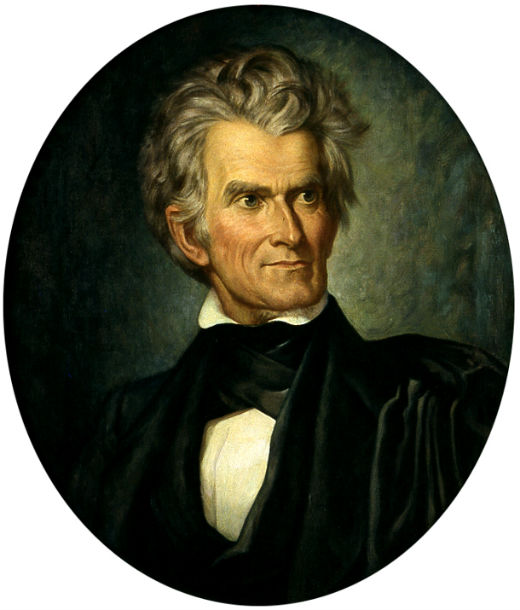
An
irony in American history has the doctrine of secession originating in
the South when it was first advanced by New England over the issue of
Louisiana’s admission to Statehood. Jefferson and Madison, both
Southerners, opposed secession; New England Federalists demanded it.
Bernhard Thuersam, Chairman
North Carolina War Between the States Sesquicentennial Commission
"Unsurpassed Valor, Courage and Devotion to Liberty"
"The Official Website of the North Carolina WBTS Sesquicentennial"
New England Federalists and their Secession Doctrine
“The
final political phenomenon to arise out of the North-South competition
of the 1790s was the doctrine of Secession. It represented the death
rattle of the Federalist party. The pivotal year was 1800 when the
Democratic leaders Jefferson and Burr succeeded in putting together a
coalition of the have-nots of the country – the agriculturalists of the
South and the proletarians of the Northern cities. They won control of
the nation.
The
Federalist party survived another sixteen years, although it never
again won control of the House, Senate or presidency. It did not take
defeat well.
Barely
three years after the Democratic rout, Northern Federalists began
arguing for the secession of the New England States from the Union.
There was nothing understated about their secessionist position. It was
widespread, and if it could not be done peaceably, they said, it should
be done violently.
Listen
to one of the many secessionists, Josiah Quincy III, scion of the New
England Quincy’s, future mayor of Boston and future president of Harvard
University. In 1811 he was a thirty-eight-year-old congressman
standing opposed to the admission of Louisiana as a State:
“It
is my deliberate opinion,” he said, “that if this bill passes, the
bonds of this union are virtually dissolved, that the States which
compose it are free from their moral obligations, and that as it will be
the right of all, so it will be the duty of some to prepare,
definitely, for a separation; amicably if they can; violently if they
must.”
One
man who listened carefully that year was a freshman congressman from
South Carolina. He was John C. Calhoun, who had been taught the
secessionist doctrine in the law schools of New England, who had
listened to it in the Congress, and who would one day carry it back down
South . . . .
Meanwhile, it is an unfair stroke that history has
identified the South with secession when in fact the earliest and
clearest arguments against it were proposed by Jefferson and Madison.
The creators of secession doctrine, and the teachers of it from 1800 to 1817, were New England Federalists.”
(The
Natural Superiority of Southern Politicians, A Revisionist History,
David Leon Chandler, Doubleday & Company, 1977, pp. 114-116)
Arapahoe High gunman: A Lefty
Via WiscoDave

The teenage gunman who entered Arapahoe High School on Friday afternoon and shot two fellow students with a shotgun was outspoken about politics, was a gifted debater and might have been bullied for his beliefs, according to students who knew him.
Arapahoe County Sheriff Grayson Robinson identified the gunman as Karl Pierson, an 18-year-old student.
"He had very strong beliefs about gun laws and stuff," said junior Abbey Skoda, who was in a class with Pierson during her freshman year. "I also heard he was bullied a lot."
Robinson said that his department was investigating reports that Pierson was seeking to settle a score with a teacher after a confrontation.
More @ The Denver Post
Subscribe to:
Posts (Atom)