Wednesday, June 5, 2019

PATCON XV, Family Reunion and 1st Harvest


The beans were soaked in water for two days before planting and you can see the results.  They broke the surface after a few days.

First pickins' from the garden and fruit trees. The peppers were planted 3 weeks ago.

Remembering Real Southern Statesmen


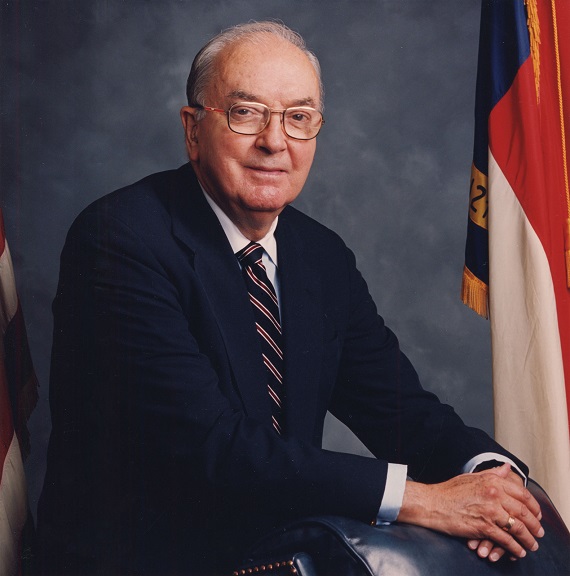
Over the years I have known a few—very few—politicians whom I have admired greatly. It seems that the age of those remarkable statesmen and political leaders who once gave substance and guidance to this nation and to our states has passed for good.

Think of it: during the first half century of the existence of the old American Republic we were graced with the likes of George Washington, Thomas Jefferson, James Madison, and John Tyler as presidents. In Congress there were such unique worthies as Nathaniel Macon, John Randolph of Roanoke, and John C. Calhoun—Southerners all. And during four years of bitter and destructive war, former Mississippi Senator Jefferson Davis led the destiny of the Confederate States of America.

But since the end of that conflict, I can think of only one American president that I nearly unequivocally admire: Grover Cleveland.

The Mekong Delta on the Brink of a New Decade

 What a shot!
 
& my favorite beer.

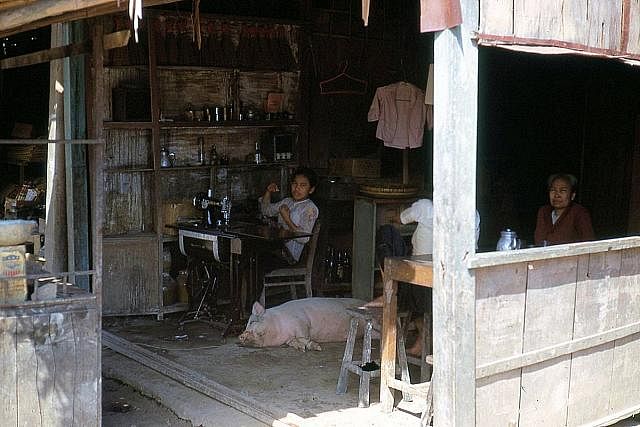
Taken by Stewart Jackson, a member of the US Army in 1970, and archived in the gallery of the 6/31st Infantry in Vietnam, these photos depict life in Duong Diem Town, Chau Thanh, Tien Giang Province.

The 1970s were a turbulent decade for Vietnam. This collection reveals the dark realities of war: soldiers, guns and army trucks exist amongst the Mekong Delta province's seemingly peaceful greenery and bustling markets.

More @ Saigoneer

Trump reads prayer from FDR on D-Day anniversary


Trump: Unarmed Civilians Are ‘Sitting Ducks’

Via Billy

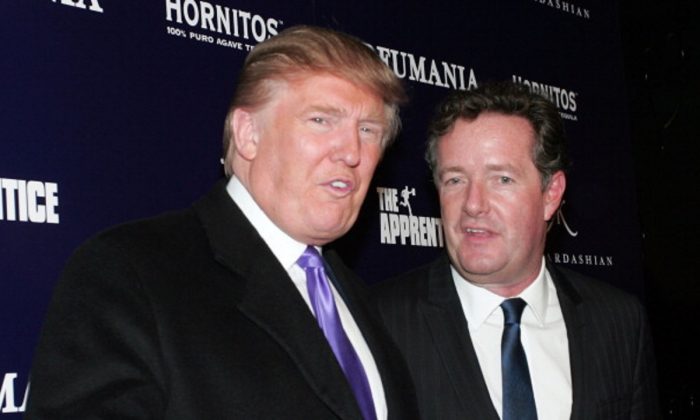
Donald Trump (L) and Piers Morgan celebrate Kim Kardashian's appearance on "The Apprentice" at Provacateur in New York, New York, on Nov. 10, 2010. (John W. Ferguson/Getty Images)

President Donald Trump said on June 5 that unarmed civilians are “sitting ducks” by obeying laws that prevent carrying guns for self-defense.

“When somebody has a gun illegally and nobody else has a gun because the laws are that you can’t have a gun, those people are gone,” Trump told “Good Morning Britain’s” Piers Morgan during an interview that covered a range of gun control topics.

“They have no chance,” he added.

Louisiana Poets


A review of Louisiana Poets: A Literary Guide, (U. Press of Mississippi, 2019) by Catharine Savage Brosman and Olivia McNeely Pass.

The poet and the scholar are reportedly different sorts of people. Rarely do you find high performance in both roles combined in one person. Catharine Brosman has done it. The only other example I can think of is the British classicist and poet A.E. Housman.

Brosman has published 15 well-received collections of poetry. But also, as retired Professor of French of Tulane University, she has written or edited, by my count, 17 volumes on French literature and culture.  These are both factual and critical guides to a large number of French writers and visual artists.  Real scholarship of the sort that is increasingly scarce these days.

In the last few years Brosman has turned her broad and deep scholarship to the literature of the South. Louisiana Poets, co-written with Olivia McNeely Pass, tells us what we need to know about the lives and works of more than 40 poets practicing in recent times, including African Americans and adopted Louisianans.

Louisiana Poets was preceded by Louisiana Creole Literature: A Historical Study (2013) and Southwestern Women Writers and the Vision of Goodness (2016).  The first offers a surprising account of the extent and quality of Louisiana literature in French from its founding.

I remember a time when it was conventional cant that the South was disappearing, and that “Southern literature” had already done so. Catharine Brosman’s scholarship reveals that the central role of Southern writers in American civilisation is with us yet. The reports of its demise have been greatly exaggerated.

Servants and Slavery in England

 Image result for Albion’s Seed: Four British Folkways in America, Oxford
 
The immigrants who came to Virginia came from every county of England, and a majority of the indentured servants “hailed from sixteen counties in the south and west of England – the same area that produced Virginia’s elite.” The majority settling in the Berkley Hundred “whether sponsors, tenants at labor or indentured servants, were . . . born and bred in Gloucester.”

And it is estimated that 80 to 90 percent of Virginia’s early servants came from London’s poor. Like many other peoples and countries, the English themselves passed through a phase of slavery, serfdom and indentured servitude, on their way to emancipation and liberty.
www.Circa1865.org   The Great American Political Divide

Servants and Slavery in England

“Most of Virginia’s servant immigrants were half-grown boys and young men. Three out of four were between the ages of fifteen and twenty-four. Only 3 percent were under fifteen, and less than 1 percent was over thirty-five – a sharp contrast with Massachusetts.

More than a few of these youngsters were “spirited” or kidnapped to Virginia. Parliament in 1645 heard evidence of gangs who “in a most barbarous and wicked manner steal away many little children” for service in the Chesapeake colonies. Others were “lagged” or transported after being arrested for petty crime or vagrancy.

Virginia’s recruiting ground was a broad region in the south and west of England, running from the weald of Kent to Devon and north as far as Shropshire and Staffordshire. Its language and laws were those of the West Saxons, rather than the Danes who settled in East Anglia, or the Norse who colonized the north country, or the Celts who held Cornwall and Wales.

During the early Middle Ages slavery had existed on a large scale throughout Mercia, Wessex and Sussex, and had lasted longer there than in other parts of England. Historian D.J.V. Fisher writes that “the fate of many of the natives was not extermination but slavery.”

This was not merely domestic bondage, but slavery on a large scale. During the eighth and ninth centuries, the size of major slave holdings in the south of England reached levels comparable to large plantations in the American South. When Bishop Wilfred acquired Selsey in Sussex, he emancipated 250 slaves on a single estate. Few American plantations in the American South were so large even at their peak in the nineteenth century.

By the time of American colonization, both slavery and serfdom were long gone from this region. But other forms of social obligation remained very strong in the seventeenth century.”

(Albion’s Seed: Four British Folkways in America, Oxford University Press, 1989, David Hackett Fisher, excerpts pp. 231; 241-243)

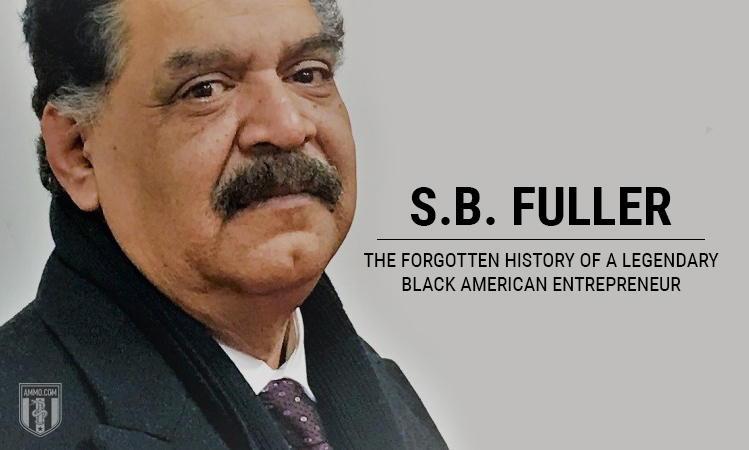
S.B. Fuller: The Forgotten History of a Legendary Black American Entrepreneur

Hey Brock,

Yesterday (June 4th) marked the birthday of S.B. Fuller. Does this name ring a bell? If not, don’t worry.

My man was one of the most successful black entrepreneurs of his time yet the socialist kool-aid drinkers have gone to considerable lengths to destroy his reputation because of his staunch Republican and free-market beliefs.

You see, Fuller was all about business and self-reliance. Not racial quotas, affirmative action stances, anti-discrimination laws, etc… His philosophy about how to end segregation in the South was through black achievement, not government intervention. Obviously not the most popular of opinions.

His comment at his induction ceremony that "a lack of understanding of the capitalist system and not racial barriers was keeping blacks from making progress” combined with an interview in U.S. News and World Report where he stated that "Negroes are not discriminated against because of the color of their skin. They are discriminated against because they have not anything to offer that people want to buy” caused some black leaders to call for a boycott of Fuller products. The boycotts were largely unsuccessful, but his reputation was quite tarnished in the black community.

Fuller’s story is fascinating to me and I believe you will find it as such too. Give it a read. Maybe a share. And we’ll talk soon, my friend :)

-Alex
 S.B. Fuller: The Forgotten History of A Legendary Black American Entrepreneuer

In the days before President Lyndon Baines Johnson, black Republicans were a thing. And chief among them was Samuel B. Fuller. Fuller was a black American entrepreneur in the mid-Century United States. More than just an entrepreneur, he also gave back to the black community by providing both inspirational speeches as well as nuts-and-bolts training at a time when entrepreneurially minded black Americans had precious few options for either. Some entrepreneurs trained or inspired by Fuller include John H. Johnson of Johnson Publishing and George Ellis Johnson of Johnson Products.

 More @ Ammo.com

Hillary Clinton’s Russia Collusion IOU: The Untold Facts That Will Stun You

Via David

Hillary Clinton

During the combined two decades she served as a U.S. senator and secretary of State, Hillary Clinton’s patrons regularly donated to her family charity when they had official business pending before America’s most powerful political woman.

The pattern of political IOUs paid to the Clinton Foundation was so pernicious that the State Department even tried to execute a special agreement with the charity to avoid the overt appearance of “pay-to-play” policy.

Still, the money continued to flow by the millions of dollars, from foreigners and Americans alike who were perceived to be indebted to the Clinton machine or in need of its help.

NC deputy picking up engagement ring turned away from store over service weapon

Via Stephanie Pippin Sauls

NC deputy picking up engagement ring turned away from store over service weapon

An Iredell County deputy attempting to pick up a pre-purchased engagement ring from a Kay Jewelers Tuesday was turned away because his uniform, which contained a service weapon, didn't meet store policy, officials say.

The uniformed deputy used his lunch break to pick up an engagement ring at Kay's on Turnersburg Highway in Statesville. The deputy had already paid for the ring and was informed by jewelers that the ring was sized and ready for pick up.

More @ CBS