I tremble for my country when I reflect that God is just.
— THOMAS JEFFERSON
A Review of
In Pursuit of Reason: The Life of Thomas Jefferson, by Noble E. Cunningham. Jr., Baton Rouge and London: Louisiana State University Press, 1987. 414 pages.
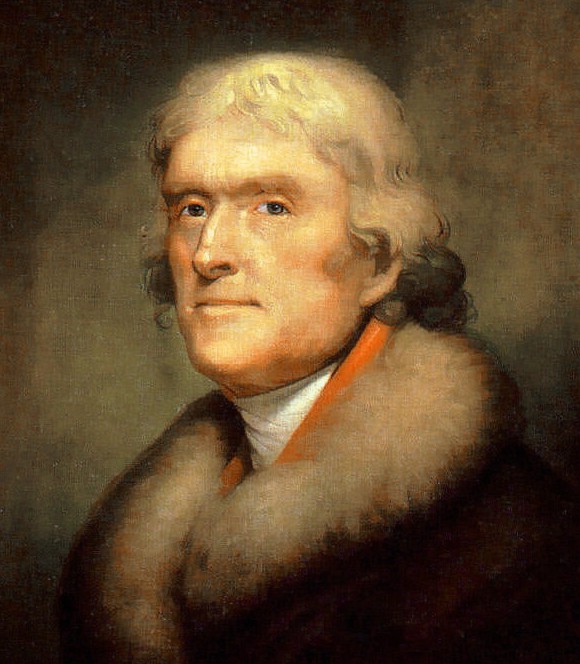
With the exception of the driven and depressed Lincoln, no major
figure in American history is in the final analysis, more enigmatic than
Jefferson. Without any exception, none is more complex. There is more
to the enigma and complexity than a multitude of facets—political
leader, botanist, architect, linguist, ethnographer, musician, man of
letters, and much else. (If he had never held a public office.
Jefferson’s correspondence would still be one of the most valuable
treasures of his era.) But behind these varied roles was a mind of a
very high order. With deep and complicated reserves, yet covered by an
impenetrable mask of everyday balance and harmony that was more than
sufficient for the highest worldly success without beginning to exhaust
its capacity or reveal its real nature. In many respects, the enigma of
Jefferson, delightfully hinted at in Albert Jay Nock’s
early-20th-century biography, is similar to that of his contemporary,
Goethe, and likewise will remain forever inaccessible to those of us who
do not enjoy the mental and moral gifts of nature in such abundance.