Showing posts sorted by relevance for query traveller. Sort by date Show all posts

Thursday, October 18, 2012

TRAVELLER

Via Tim Manning


Traveller, R.E. Lee's horse is buried just outside of Lee's Chapel in Lexington, Virginia. Hundreds of thousands of Lincoln head pennies have been left face down on the bronze plague marking Traveller's burial site. Southerner's continue to do this EVERYDAY of the year. This is a tradition begun by VMI students for good luck prior to taking a big test or an exam. VMI students firmly believed that good luck would follow them for placing a Lincoln head penny with the face down so that Lincoln would have "to kiss the ass of Lee's horse Traveller." My family always leaves the Lee Chapel by the side door at Traveller's grave so that they can pay their tribute to General Lee's horse in this manner.

Before Lee's death, the aging General Lee dictated a letter to his daughter Agnes for an artist who wished to depict his horse. No words could better express Lee's love for his beloved Traveller:

"If I were an artist like you I would draw a true picture of Traveller — representing his fine proportions, muscular figure, deep chest and short back, strong haunches, flat legs, small head, broad forehead, delicate ears, quick eye, small feet, and black mane and tail. Such a picture would inspire a poet, whose genius could then depict his worth and describe his endurance of toil, hunger, thirst, heat, and cold, and the dangers and sufferings through which he passed. He could dilate upon his sagacity and affection and his invariable response to every wish of his rider. He might even imagine his thoughts, through the long night marches and days of battle through which he has passed.

"But I am no artist; I can only say he is a Confederate grey. I purchased him in *the mountains of Virginia in the autumn of 1861, and he has been my patient follower ever since — to Georgia, the Carolinas, and back to Virginia. He carried me through the Seven Days battle around Richmond, the Second Manassas, at Sharpsburg, Fredericksburg, the last day at Chancellorsville, to Pennsylvania, at Gettysburg, and back to the Rappahannock. From the commencement of the campaign in 1864 at Orange, till its close around Petersburg, the saddle was scarcely off his back, as he passed through the fire of the Wilderness, Spotsylvania, Cold Harbor, and across the James River. He was almost in daily requisition in the winter of 1864-65 on the long line of defenses from Chickahominy, north of Richmond, to Hatcher's Run, south of the Appomattox. In the campaign of 1865, he bore me from Petersburg to the final days at Appomattox Court House. You must know the comfort he is to me in my present retirement….Of all his companions in toil, 'Richmond,' 'Brown Roan,' 'Ajax,' and quiet 'Lucy Long,' he is the only one that retained his vigor. The first two expired under their onerous burden, the last two failed. You can, I am sure, from what I have said, paint his portrait."
~ CSA General R.E. Lee

*At the state fair in Lewisburg where I attended military school.

Monday, May 1, 2017

Traveller. A difficult horse but Robert E. Lee loved him and made him famous.

 
Traveller was originally purchased at the Lewisburg Fair, Lewisburg, Virginia (West Virginia) where I attended military school at Greenbrier Military School.


After celebrating Independence this week…, I wanted to speak about a loved war horse.

The reason I chose Traveller is because I know nothing about Southern history and because it seems that Robert E. Lee was in the minority in his love for this particular horse…  Traveller wasn’t your garden variety, easy to love, easy to ride horse.  He was a bit of a pain. 

It gives me pleasure to write about a horse that most would dump but that one cherished – and from that, they built a very strong, unbreakable bond.

Saturday, October 9, 2010

General Lee’s Last Days

lee2.gif

“The end was now drawing near, yet the General uttered no complaint. He was meeting the last enemy as he had met Grant at Appomattox, without parade or ostentation.

An incident of these last days should be preserved. It was related by Mrs. Tabb Bolling Lee. This former Petersburg belle had been in the habit of rising at a late hour, anywhere perhaps from ten to noon. Now, on her first visit to her husband’s people, she was horrified to learn that breakfast would be ready at seven o’clock and each member of the household was expected at family prayers promptly at 6:45. The first morning, the new arrival jumped into her clothes and hastened down to the parlor to find that the General had finished the “lesson” and was well into the “prayers.” As she slipped in and knelt by his side she felt his arm about her. Without interruption the prayer went on and was concluded.

Next morning the new daughter did not get down to prayers at all, but did manage to be on hand at breakfast. After the meal the General approached and quietly remarked that no day should be lived unless it was begun with a prayer of thankfulness and an intercession for guidance. “And now, my child,” he softly concluded, “unless you get down to morning prayers your old father will give you no more kisses.” The punishment was adequate. Thereafter the new daughter was on time for prayers.

The evening of September 28 was raw, damp and unseasonably cold. At that unpropitious hour the vestry of Grace Church met in the unheated building. After presiding at an extended session the General walked up the hill to his home. Tea awaited him. Slowly moving to his pace at the head of the table, he stood, as was his custom, to ask the blessing. His tongue failed to function. The summons had come. From the couch, in the recess window of the dining room, where they laid him, he did not again move.

The physicians treated him for venous congestion of the brain, and, at first, held out hope for recovery. The symptoms were favorable. He was not paralyzed and could move his arms, legs and body, though with pain. He was entirely conscious. Sometimes he spoke. He answered questions, but in monosyllables. His mind was clear and seemed independent of his body. One day the doctor, seeking to cheer him, referred to Traveller. The General must make haste and get well; Traveller was lonely and was looking for him. The sick man shook his head and closed his eyes.

During the final days there was no death-bed scene, no posing, no sadness of farewell. Silence filled the sorrowing chamber. Toward the end chilliness set in. Powerful restoratives were then administered. The intellect was dimmed. The poise and self-restraint of a life-time vanished. The dying man was on the battle field again, astride his war-horse. “Strike the tent!” he exclaimed, as a great storm swept the valley. “Tell Hill he must come up!”Lees Tomb.jpg

At nine o’clock on the morning of October 12 the heart ceased to beat, and a great gentleman, please God, was dead.”

(Robert E. Lee, A Biography, Robert W. Winston, William Morrow & Company, 1934, pp. 411-413)


Via Bernhard

Thursday, November 18, 2010

Help Ron Paul Fight Back Against Airport Scanners And Gropers


Fight Back Against Airport Scanners and Gropers!

Enough is enough! Support Ron Paul's "American Traveller Dignity Act of 2010" (H.R. 6416) to begin turning the tables on the TSA's highhanded and unconstitutional bodily inspection procedures.

Click here for 5-minute video of Ron Paul's "Enough is enough!" speech in the House on November 17, during which he explains his bill and the need for the TSA to stop treating Americans like cattle.

Read "Ron Paul on TSA Abuse: 'Enough Is Enough'" at TheNewAmerican.com for further information.

Here's the full-text of Ron Paul's H.R. 6416:

To ensure that certain Federal employees cannot hide behind immunity.

Be it enacted by the Senate and House of Representatives of the United States of America in Congress assembled,

SECTION 1. SHORT TITLE.

This Act may be cited as the `American Traveller Dignity Act of 2010'.

SEC. 2. NO IMMUNITY FOR CERTAIN AIRPORT SCREENING METHODS.

No law of the United States shall be construed to confer any immunity for a Federal employee or agency or any individual or entity that receives Federal funds, who subjects an individual to any physical contact (including contact with any clothing the individual is wearing), x-rays, or millimeter waves, or aids in the creation of or views a representation of any part of a individual's body covered by clothing as a condition for such individual to be in an airport or to fly in an aircraft. The preceding sentence shall apply even if the individual or the individual's parent, guardian, or any other individual gives consent.


Enough is enough! Let's stop allowing ourselves to be treated like cattle!

If you support H.R. 6416, let your representative and senators know immediately!

Thanks.

Your friends at The John Birch Society

Sunday, October 26, 2014

'Nothing is Being Done to Make Our Own Countries Safe'


Via comment by Sioux on Suspicious Canada Shooting Triggers ‘Minority Repo...

I am sitting with Geert Wilders, leader of the Netherlands’ Party for Freedom, and the news has just flashed that Michael Zehaf-Bibeau, the Canadian convert to Islam who terrorized Ottawa on Wednesday, had previously had his passport lifted by the Canadian government as an officially designated “high-risk traveller.” 

That means that before Zehaf-Bibeau put a bullet through the heart of Cpl. Nathan Cirillo, a young reservist standing guard with an unloaded rifle at the Canadian war memorial, and before Zehaf-Bibeau rushed into parliament where, thankfully, he was gunned down by security before he could murder again, Canadian authorities had already identified him as someone likely to join the jihad in the Middle East. In fact, so likely was Zehaf-Bibeau to join a jihadist group such as ISIS that Canada did what many Western governments are now doing in the name of counter-terrorism: they took Zehaf-Bibeau’s passport away.

“That’s the same as the other one!” Wilders notes energetically, referring to Martin Couture-Rouleau, also an Islamic convert and “high-risk traveller,” who drove his car into two Canadian soldiers in Quebec earlier in the week, killing Warrant Officer Patrice Vincent. Couture-Rouleau, who was shot dead at the scene of his crime, had had his passport taken from him in July when he was arrested at the airport before he could travel to Turkey.

In other words, but for good Canadian police work, it looks as if both of these Islam-inspired murderers would have left Canada and disappeared into the bloody maw of the Islamic State. Phew -- that was close?

No, that was insane. Such a policy, which the Dutch government also follows, frustrates Geert Wilders to no end.

“Let them leave,” says Wilders.

More @ Breitbart

Tuesday, January 18, 2022

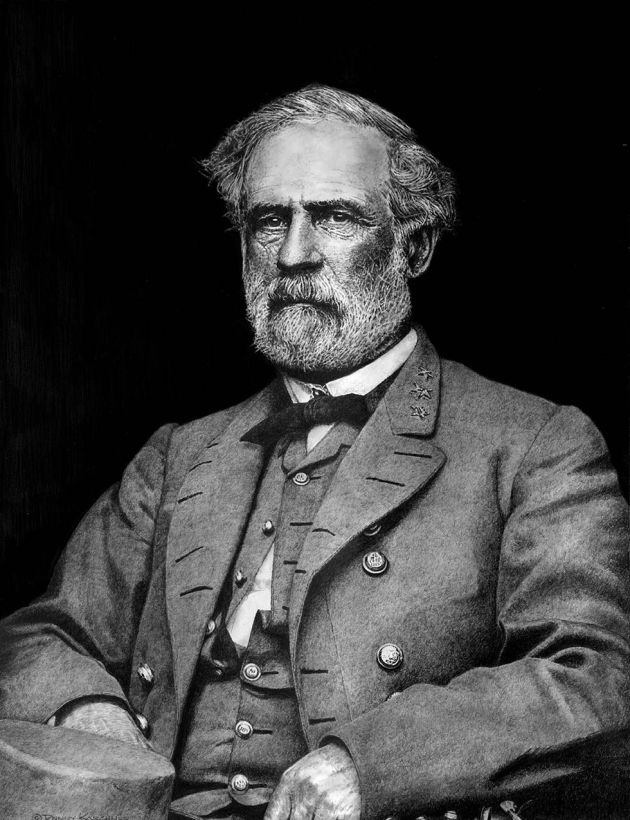
ROBERT E. LEE CAME DOWN THE STEPS of the McLean House.

 Via Billy

https://www.historyonthenet.com/wp-content/uploads/2019/01/General-Lee.jpg

A grave expression was on his face as he distractedly put on his gauntlets, mounted Traveller, and rode between the ranks of silent Union soldiers back to the final deployed lines of the Army of Northern Virginia. He had just rendered the nondescript crossroads of Appomattox Court House legendary.

In a fair snipe at contemporary authors, Lee’s own meticulous biographer, Douglas Southall Freeman, said that, while he tried to understand and document Lee’s actions, he never presumed to know his subject’s thoughts. Neither should we. And yet…
;
It isn’t that difficult to imagine some of them. As Lee guided Traveller back to the old army, his thoughts raced from what General Grant had just said, what the surrender terms had been, what he could say to his soldiers, the effect of the news upon the morale of the men, Mary back in Richmond, what his children would feel, his own precarious future as a Union prisoner, the war, its toll, the good men lost, the cause, the shame, the failure.
 
More @ NamSouth

Saturday, October 22, 2011

A Long Day’s Journey Out of Night, Part III

Gates of Vienna
VERBATIM POST
========

Below is the third article in a four-part series on history, human development, and Islam by our English correspondent Seneca III. A slightly different version of this essay was previously published at Crusader Rabbit.

by Seneca III

On a chill Thursday morning, February 17th in the year 1600, just sixteen years before Galileo Galilei barely escaped the same fate, the fifty-one-year-old Benedictine friar Giordano Bruno was led naked and with an iron spike through his tongue into the Campo de’Fiori in Rome, burned at the stake for committing “heresy in matters of dogmatic theology”, and his ashes dumped in the Tiber. His crime had been to comment on the work of Nicolaus Copernicus and suggest that there were infinite worlds in the universe with intelligent life, some perhaps with beings superior to humans.

[“I can imagine an infinite number of worlds like the Earth, with a Garden of Eden on each one. In all these Gardens of Eden, half the Adams and Eves will not eat the fruit of knowledge, and half will. But half of infinity is infinity, so an infinite number of worlds will fall from grace and there will be an infinite number of crucifixions.” — Giordano Bruno, ‘On the Cause, Principle, and Unity’, 5th dialogue.]

This was an extremely brave thing to do. Within the Roman Catholic Ecumene of the 16th and 17th Centuries — just as it is today within the Islamic Umma — it was invariably fatal to challenge the Church’s doctrinal power base, a fate Copernicus, a curate and Renaissance polymath, had managed to avoid by publishing his seminal work ‘On the Revolutions of Celestial Spheres’ in 1543, only shortly before his death by natural causes at the age of seventy.

Whether the timing of its publication and his passing were planned or simply fortuitous is a moot point, although circumstances do point to the latter. But being the essential pragmatist that he was Copernicus may well have understood that the failure of the human mind to come to terms with the fundamental difference between faith and doctrine, between apostasy and heresy, has been a prime cause of conflict and atrocity throughout our history.

Bruno was also a cosmologist and polymath of high standing — his qualitative approach to mathematics and his application of spatial paradigms of geometry to language are considered a classic of their time — but in other respects he was a very different kettle of fish to Copernicus. Recent examination of the background to the case indicates that another dynamic had just entered stage left, Renaissance Hermeticism. Bruno subscribed to the mysticism verging on magic that lay at the core of Hermeticism, esoteric beliefs originating in the ancient Greek writings attributed to Hermes Trismegistus and which to some extent still exist today within Rosicrucianisn, Freemasonry and Coptic scripture.

In this context it is worth noting the seventh of the eight charges that Bruno faced:
  • Holding opinions contrary to the Catholic Faith and speaking against it and its ministers.
  • Holding erroneous opinions about the Trinity, about Christ’s divinity and Incarnation.
  • Holding erroneous opinions about Christ.
  • Holding erroneous opinions about Transubstantiation and Mass.
  • Claiming the existence of a plurality of worlds and their eternity.
  • Believing in metempsychosis* and in the transmigration of the human soul into brutes.
  • Dealing in magics and divination.
  • Denying the Virginity of Mary.

Faith, belief in superior beings, gods if you will, is a metaphysic probably as old as our species, and a very slippery one it is; in its purest form it is spiritual and personal but its fellow traveller, theology, or dogma, is temporal, a human attempt to explain the unexplainable and invariably it does so in what are the perceived best interests of a particular power elite, the priesthood or clerics.

Bruno’s statement about the nature of the Universe was clearly a challenge to the elite of his day. It undermined their theological position, their ‘raison d’etre’, it condemned him to a dreadful fate and caused his works to be placed in the Index Librorum Prohibitorum (along with those of Copernicus) for fear they would infect others. Yet today these statements do not even raise an eyebrow, they might even be considered passé in some quarters, and this must therefore beg the question “How was the ruthless power of the Christian clergy and the theological dogmatism that sustained it shattered, and hence why are Inquisitions and burning stakes no more?”

Broadly speaking, the short answer can be found among the headstones of those men and women who each walked their own small stretch of the long trail that began with the Renaissance in the 14th century, struggled through the devastation of the Thirty Years War — which ended in the predominantly secular settlements of the Peace of Westphalia — and culminated in the Enlightenment, an era of Western philosophy, intellectual, scientific and cultural life centred upon the 18th century in which reason was advocated as a primary source for legitimacy and authority.

However, that said, another question raises its ugly head “Why did the need arise in the first place and why, after all those centuries of blood and pain do we now face the prospect of having to do it all over again to an atavistic Imamate?”

One answer may lie in a subtle difference between the three major Religions that arose in the area of the fertile crescent — Judaism, Christianity and Islam — and those of the East such as Hinduism, Confucianism, Shintoism and that most humanitarian of them all, Buddhism.

These Eastern religions share several characteristics that are in essence quite different from those of the Western Triumvirate:
  • They tend to be more ethical and philosophical systems and less the rigid practice of a set of clearly defined rules imposed from above.
  • They do not insist upon monotheistic worship.
  • In general, whilst they acknowledge the existence of gods, they do so without the overriding concept of sin and punishment that bedevils the Triumvirate.
  • They are mostly older having evolved slowly, either uniquely or out of a precursor system, rather than springing into existence over a relatively short time frame.
They are not, of course, immune from sectarianism or internecine strife but, with the exception of certain caste systems, this sectarianism is overall more benign than malignant. Indeed, Shintoism wholeheartedly embraces Buddhism and many of its practises, and both systems ease along together in complete harmony.

On the other hand Judaism, Christianity and Islam are ‘revealed’ belief systems burdened with revelations, instructions cast in stone in the wording and in the light of the limited understanding of their time, the word of God delivered through the inadequate mouth of man out of the traditions of Hellenistic and Roman metaphysics, belief systems that were riddled with oracles, seers and prophets.

And, when it comes to prophets, predestination and reason meet at a Philippi both far more ancient and modern than the Roman one, one where, in an era of WMD, we should all be thinking pretty damn hard about what the future holds and what we are going to have to do if we want to hold onto it.


Offhand I can only think of two recent publications that have elicited a similar medieval response as did the works of Copernicus, Bruno and Galileo: The Bell Curve (1994, Hernstein & Murray**) and The Satanic Verses (1988, Rushdie). Both challenged established ‘dogmatic theology’, the former in the field of cognition, particularly its application within the politically correct constraints of ethno-social doctrine, and the latter in the swamp of Islamic revelation. Their authors also faced trial before a court of vested interests.

Although Rushdie has managed to survive the wrath of the demented ‘Slaves of Allah’, others have not been so fortunate. Hitoshi Igarashi, the Japanese translator, was stabbed to death in 1991, and a few days later Ettore Capriolo, the Italian translator, was stabbed and seriously injured. William Nygaard, the Norwegian publisher, just managed to survive an assassination attempt in Oslo in 1993.

Conversely the The Bell Curve did not generate any physically lethal fatawa, but as Professor Richard Hernstein died before the book was released, he was unable to defend his thesis during the coruscating ideological storm that followed. His co-author, Charles Murray, lived on through a long period of media and academic debate and comment, both pro and con, including some sustained attacks on the personal integrity and academic standing of the authors. This proved again that one diddles with dogma at one’s peril, and therefore one should not be that surprised that recently there has been a demand from the ‘Intelligent Design’ tendency for the teaching of this devious repackaging of Creationism as equal to and alongside that of Evolution.

If nothing else this illustrates that priesthoods continue to cling tenaciously to those simplistic, doctrinal explanations that have for so long sustained their sinecures. And, having only these to offer in support of their postulates, such clergy are by necessity reduced to negative campaigning where the rationale behind their premise pushes credulity to its limit by proposing that the Universe is far too complex to have happened by chance and, a priori, must have been ‘designed’.

Consequently, and irrespective of whatever my own metaphysic is or is not, I suggest that if the universe is too complex to have just happened and therefore must have been designed, then it is axiomatic that the Designer must be infinitely more complex than the design. Hence, compelled by the imperative illogic of the original premise, I must ask, “What, then, designed the Designer?”

There is, of course, no answer to be found in such an infinity of mirrors, and those who need to embrace their existence within the constraints of revealed belief systems could ease their pain by simply recognising evolution as the Designer’s chosen methodology. After all, who are they, mere mortals, to deny the gods — whom, one presumes, have all of time and unlimited options on their side — this particular tool of their choice?

Or, to put it another way, from what moral position can we set out to deal with the pre-medieval, unenlightened dogmatism of Islam whilst still burdened with the detritus of our own?

That said, let the floodgates open, but before they do I would dare to suggest that Intelligent Designers and the non-inquiring minds of the Islamic Umma might care to note Bruno’s reply to the Inquisition: “Perhaps you, my judges, pronounce this sentence against me with greater fear than I receive it” Wherewith he demonstrated that a human mind under the lonely lens of a rational microscope is a prime example of evolution in action.


Notes:

*
Metempsychosis is the belief in the transmigration of the human soul into the new body of the same or a different species. My personal take on the wording of this charge is that it is interesting in as much as it does not specifically deny the concept of human reincarnation, possibly because it might bring into question the matter of Jesus rising from the dead.
**
An interesting consequence of this publication was the subsequent modification of the Stanford-Binet Intelligence Scale (and test) into an acultural version (SB5, in 2003) — to my mind a classic case of rigging the game in order to achieve a desired result, a procedure not entirely alien to all belief system

Wednesday, December 3, 2014

Living Skeletons Defending Petersburg

 http://www.gornai.ya1.ru/uploads/posts/2012-12/thumbs/1354794122_1354599549_jv1-yiepbq.jpg

General Robert F. Hoke proved to be one of Lee’s most capable commanders. Hoke was detached to his home State of North Carolina where he liberated Plymouth from enemy occupation in April 1864, and very nearly accomplished the same at New Bern.  Sent by Lee to defend Fort Fisher from enemy attack in late 1864, Hoke’s veteran division effectively opposed the enemy march on Wilmington, forcing them into wide flanking movements.  Read more at: http://www.ncwbts150.com/AtWarBattlegroundsHomefront.php
Bernhard Thuersam, Chairman
North Carolina War Between the States Sesquicentennial Commission
"Unsurpassed Valor, Courage and Devotion to Liberty"
www.ncwbts150.com
"The Official Website of the North Carolina WBTS Sesquicentennial"

Living Skeletons Defending Petersburg

“After the Union disaster at “the Crater,” the armies returned to three weeks of uneventful trench warfare. During the first twenty days of August [1864], “nothing occurred with us to break the monotony in the trenches, such as it was,” according to [General Johnson] Hagood.  [General Alfred H.] Colquitt’s brigade was permanently returned to Hoke on August 2.

On August 19, [Colquitt’s, Hagood’s and General Thomas L. Clingman’s brigades were assigned to General William Mahone] in Lee’s unsuccessful three-day effort to dislodge the Federals from the Weldon and Petersburg Railroad.  Of the 681 officers and men Hagood sent into the battle, only 292 emerged unscathed.  General Clingman was seriously wounded in the leg on the first day of the engagement and was lost to Hoke for the remainder of the war.

Because of deadly attrition and the casualties sustained on August 21, Hagood asked that he be allowed to take his survivors “to some quiet camp where rest and access to water might recruit their physical condition.” His request was granted by Lee.

When the 740 frail soldiers of his command emerged from the Petersburg trenches on August 20, they represented just a third of the complement that had entered the works sixty-seven days earlier.  The brigade inspector was delighted when a local citizen offered his forty-acre estate in nearby Chesterfield County for a camp site.

In mid-September, Hoke was granted permission to pull his other weary brigades from the trenches and take them to the utopia being enjoyed by Hagood’s men. Of the twenty-two hundred soldiers on hand when Brigadier-General [James G.] Martin put his soldiers in the trenches, seven hundred “living skeletons” scrambled out under the command of General [William W.] Kirkland on Thursday, September 15.

For ten days, Hoke and the worn and jaded men of his division enjoyed overdue pleasures. In a letter to his sister, Lieutenant Edward J. Williams of the Thirty-first North Carolina expressed the excitement that abounded: “The most pleasant topic amongst us . . . is that we are at last clear of the ditches, shells, & [bales] of every description & are lying at ease on a beautiful hillside washing our faces at least once per day and no work to do. Since the 15 of June we have held a portion of the works in front of Petersburg & have never been relieved until now.”

The brief respite from war ended all too soon on September 28, when the men returned to the trenches. As a climax to the period of rest and relaxation, the division was honored with a grand review by General Lee . . . dressed in full uniform with a yellow sash, was atop Traveller as he rode past the remnants of Hoke’s four brigades.”

(General Robert F. Hoke, Lee’s Modest Warrior, Daniel W. Broadfoot, John F. Blair, 1996, pp. 218-219)

Monday, May 1, 2017

A Person I Admire, By Dixie And Daddy


 http://www.humanevents.com/wp-content/uploads/2013/05/robert-e-lee.jpg 

Re-post from Lee's Birthday2007+
 
A Person I Admire

By Dixie Townsend
Nine Years Old

Rocky Mount Telegram
March 3, 2006

"The person I admire is Robert E. Lee, the general of the Confederate Army. He's my Dad's favorite person. Mr. Lee was an excellent horseman. He, and his horse Traveller, led the Confederate soldiers to fight against the Yankees.

His four daughters admired his courage, bravery and his Southern accent. Later in life, Lee's hair turned white. His beard was always trimmed neatly. He presented a commanding appearance, straight, alert and intelligence. He was never known to smoke, drink alcoholic beverages or use profane language.

General Lee was an American hero. Perhaps one day, I can be like him."

Fourth grade,
Tarboro-Edgecombe Academy,
Jamie Baker, teacher


Lee, (By Dixie Townsend, Nine Years Old)

                           ========  

General Robert Edward Lee

Edward Lee, in my estimation, was the greatest man this nation has ever produced. He graduated from the United States Military Academy without a single demerit, a feat that has been unequaled to this day. He also was second in his class and achieved the coveted cadet rank of Adjutant. He served over thirty years in the United States Army and General Winfield Scott stated that Lee's exploit before the Battle of Contreras in Mexico was "the greatest feat of physical and moral courage" he had ever known. General Scott marked him for high command and thought the cost would be cheap if the United States could absolutely insure Lee's life at the cost of five million dollars a year. He proclaimed that Lee "was the very best soldier I ever saw in the field."

In 1856, as dark clouds loomed, Lee stated that "There are few, I believe, in this enlightened age, who will not acknowledge that slavery as an institution is a moral and political evil."

When war finally came General Scott offered him command of the Union Army, but Lee , after pacing the floor all night, decided he could not fight against his own people. Lee's final written words to General Scott were "Save in defense of my native state, I never desire again to draw my sword."

After leading the Army of Northern Virginia to many victories against overwhelming odds, he surrendered and asked his men to go home and be good citizens. A while later he was offered $50,000 for the use of his name by a northern insurance company, but Lee politely informed them "Sirs, my name is the heritage of my parents. It is all I have, and it is not for sale." He also stated that concerning his previous actions "I could have taken no other course without dishonor, and if it were all to be done over again, I should act in precisely the same manner."

In 1868, the New York Herald proposed nominating Lee for President, but Lee by then President of Washington College where he had but one rule and that was "every man must be a gentleman."

Theodore Roosevelt characterized Lee as "the very greatest of all the great captains that the English-speaking peoples have brought forth." Winston Churchill stated that Lee was "one of the noblest Americans who ever lived."

In closing, I think the words of General/President Eisenhower would be appropriate concerning a question as to why he kept a picture of Lee in his office. He stated that Lee "was noble as a leader and as a man, and unsullied as I read the pages of our history......From deep conviction I simply say this: a nation of men of Lee's calibre would be unconquerable in spirit and soul."

Brock Townsend

"If any American father were asked which of our great men he would most want his own son to resemble, the father, if he were wise, would be compelled to answer, 'Robert E. Lee.'" '
Benjamin Andrews, President Brown University, 1880.


Saturday, August 19, 2017

America’s Second Civil War

 https://s3-us-west-2.amazonaws.com/vdare-live/wp-content/uploads/2017/08/17222105/addtext_com_MjIyMDIwOTczNw-620x372.jpg

“They had found a leader, Robert E. Lee — and what a leader! … No military leader since Napoleon has aroused such enthusiastic devotion among troops as did Lee when he reviewed them on his horse Traveller.”

So wrote Samuel Eliot Morison in his magisterial “The Oxford History of the American People” in 1965.

First in his class at West Point, hero of the Mexican War, Lee was the man to whom President Lincoln turned to lead his army. But when Virginia seceded, Lee would not lift up his sword against his own people, and chose to defend his home state rather than wage war upon her.

This veneration of Lee, wrote Richard Weaver, “appears in the saying attributed to a Confederate soldier, ‘The rest of us may have … descended from monkeys, but it took a God to make Marse Robert.'”

Growing up after World War II, this was accepted history.

Wednesday, October 12, 2011

141st Anniversary of Robert E. Lee’s Death

Via Cousin John

October 12, 1870

The headline from a Richmond newspaper read,:

"News of the death of Robert E. Lee, beloved chieftain of the Southern army, whose strategy mainly was responsible for the surprising fight staged by the Confederacy, brought a two-day halt to Richmond's business activities."

General Lee died at his home at Lexington, Virginia at 9:30 AM on Wednesday, October 12, 1870. His last great deed came after the War Between the States when he accepted the presidency of Washington College, now Washington and Lee University. He saved the financially troubled college and helped many young folks further their education.

Some write that Robert E. Lee suffered a cerebral hemorrhage on September 28, 1870, but was thought to greatly improve until October 12th, when he took a turn for the worse. His condition seemed more hopeless when his doctor told him, "General you must make haste and get well---Traveller---has been standing too long in his stable and needs exercise."

Virginia Military Institute (VMI) Cadet William Nalle said in a letter home to his mother, dated October 16, 1870, :

"I suppose of course that you have all read full accounts of Gen Lee's death in the papers. He died on the morning of the 12th at about half past nine. All business was suspended at once all over the country and town, and all duties, military and academic suspended at the Institute, and all the black crape and all similar black material in Lexington, was used up at once, and they had to send on to Lynchburg for more. Every cadet had black crape issued to him, and an order was published at once requiring us to wear it as a badge of mourning for six months."

Read entire letter on The Virginia Military Institute's website.

The rains and flooding were the worst in Virginia's history on the day General Lee died. On Wednesday, October 12, 1870, in the presence of his family, Lee quietly passed away.

The church bells rang as the sad news passed through Washington College, Virginia Military Institute, the town of Lexington and the nation. Cadets from VMI College carried the remains of the old soldier to Lee Chapel where he laid in state.

Memorial meetings were held throughout the South and as far North as New York. At Washington College in Lexington eulogies were delivered by: Reverend Pemberton, Reverend W.S. White--Stonewall Jackson's Pastor and Reverend J. William Jones. Former Confederate President Jefferson Davis brought the eulogy in Richmond, Virginia. Lee was also eulogized in Great Britain.

Many thousands witnessed Lee's funeral procession marching through the town of Lexington, Virginia, with muffled drums and the artillery firing as the hearse was driven to the school's chapel where he was laid to rest.

Booker T. Washington, America’s great Black-American Educator wrote in 1910, “The first white people in America, certainly the first in the South to exhibit their interest in the reaching of the Negro and saving his soul through the medium of the Sunday-school were Robert E. Lee and Stonewall Jackson.”

========
141st Anniversary of Robert E. Lee’s Death

Tuesday, October 12, 2010

Death Of General Robert E. Lee

The headline from a Richmond newspaper read, quote;

“News of the death of Robert E. Lee, beloved chieftain of the Southern army, whose strategy mainly was responsible for the surprising fight staged by the Confederacy, brought a two-day halt to Richmond's business activities.”

The United States flag, which Robert E. Lee had defended as a soldier, flew at half mast in Lexington, Virginia and throughout the USA

General Lee died at his home at Lexington, Virginia at 9:30 AM on Wednesday, October 12, 1870. His last great deed came after the War Between the States when he accepted the presidency of Washington College, now Washington and Lee University. He saved the financially troubled college and helped many young folks further their education.

Some write that Robert E. Lee suffered a cerebral hemorrhage on September 28, 1870, but was thought to greatly improve until October 12th, when he took a turn for the worse. His condition seemed more hopeless when his doctor told him, "General you must make haste and get well---Traveller---has been standing too long in his stable and needs exercise."

Virginia Military Institute (VMI) Cadet William Nalle said in a letter home to his mother, dated October 16, 1870, quote;

“I suppose of course that you have all read full accounts of Gen Lee's death in the papers. He died on the morning of the 12th at about half past nine. All business was suspended at once all over the country and town, and all duties, military and academic suspended at the Institute, and all the black crape and all similar black material in Lexington, was used up at once, and they had to send on to Lynchburg for more. Every cadet had black crape issued to him, and an order was published at once requiring us to wear it as a badge of mourning for six months.”

Read entire letter on Virginia Military Institute website at:

http://www.vmi.edu/archives.aspx?id=5517

The rains and flooding were the worse of Virginia's history on the day General Lee died. On Wednesday, October 12, 1870, in the presence of his family, Lee quietly passed away.

The church bells rang as the sad news passed through Washington College, Virginia Military Institute, the town of Lexington and the nation. Cadets from VMI College carried the remains of the old soldier to Lee Chapel where he laid in state.

Memorial meetings were held throughout the South and as far North as New York. At Washington College in Lexington eulogies were delivered by: Reverend Pemberton, Reverend W.S. White--Stonewall Jackson's Pastor and Reverend J. William Jones. Former Confederate President Jefferson Davis brought the eulogy in Richmond, Virginia. Lee was also eulogized in Great Britain.

When all settled down, Mrs. Robert E. Lee said, "If he had succeeded in gaining by the sword all the South expected and hoped for, he could not have been more honored and lamented."

Many thousands witnessed Lee's funeral procession marching through the town of Lexington, Virginia, with muffled drums and the artillery firing as the hearse was driven to the school's chapel where he was buried. US President Dwight D. Eisenhower knew and appreciated our nation’s rich history. President Eisenhower was criticized for displaying a portrait of Robert E. Lee in his office. This was part of his response; quote

"Robert E. Lee was, in my estimation, one of the supremely gifted men produced by this nation."


Robert E. Lee was the hero of the Southern people and admired both North and South of the Mason-Dixon Line. This Christian- gentleman's last words were, "Strike the Tent."

Calvin E. Johnson, Jr.

Freelance writer, Author of book, “When American Stood for God, Family and Country” and a member of the historical group Sons of Confederate Veterans. www.scv.org

1064 West Mill Drive

Kennesaw, Georgia 30152

Phone: 770 428 0978

Sunday, February 27, 2011

Open Carry Infringement & Wisconsin Poll

Wisconsin Governor Scott Walker Poll.
"A poll of Wisconsin voters released Thursday finds more of them support Gov. Scott Walker’s proposed reforms than oppose them.

The poll, conducted by former Bill Clinton political consultant Dick Morris, finds Walker’s reforms--as a package--are backed by 51 percent of the more than 400 likely voters surveyed while 47 percent indicated they were opposed."
===================================


"Wed Feb 24: Atlanta, GA Capitol Police telling us we can’t carry weapons across the street from the Capitol building. So we ended up going down the block to where “the line” was and set up with rifles, pistols, flags, and signs. Awaiting video and pix from that part. The video above is just the tip of the iceberg. More to follow for sure."


==================
UPDATE:
"Verbatim reports from the field via FreeFor counterprotesters in opposition to Saturday's union/fellow traveller demonstrations in Atlanta and Raleigh:"

Wednesday, April 9, 2014

General Robert E. Lee's Return from the McLean House, April 9th 1865

Via Carl


General Edward Porter Alexander from Augusta Georgia is buried in Magnolia Cemetery in Augusta along with seven other Generals . Alexander Hall at Fort Gordon, GA is name after B/Gen E Porter Alexander .Gen Alexander learn to use the Wig --wag flag signal from US Gen Myers(Know as Father of the US Signal Corp ) . Gen Alexander was the first to use signal flags in combat when he was a Capt. at Mananas (Bull Run )                                           

Having surrendered the Army of Northern Virginia, General Lee rode back toward his headquarters tent through a cool and dark Palm Sunday evening. The sun behind the clouds had slanted near the horizon; sunset in Richmond that night came at 6:24. A chaplain present with the army described the weather: "The morning had been bright and fair. By noon dark and gloomy clouds had gathered over the whole face of the sky."

From a distance of a half-mile, General Edward Porter Alexander saw Lee coming out of the village on his familiar gray "Traveller" at about 4:30 p.m. Lieutenant Colonel Charles Marshall, Lee's reliable 34-year-old aide, rode beside his chief. "A strong desire seized me," Alexander wrote, "to have the men do something, to indicate to the general that our affection for him was even deeper than in the days of greatest victory and prosperity."

Under orders from Alexander and his subordinate officers, artillerymen hurried to the roadside and formed into line. Alexander instructed them "to uncover their heads, but in silence," as Lee passed.

The hastily formed plan for a dignified, if emotional, tribute to the surrendered army's chieftain fell apart at once. Infantry posted nearby swarmed around the artillerists and as Lee drew nigh, "someone started to cheer, and then, of course, all joined in." When he could be heard, the general "told the men in a few words that he had done his best for them & advised them to go home & become as good citizens as they had been soldiers."

During General Lee's short, simple remarks, "a wave of emotion seemed to strike the crowd & a great many men were weeping." Soldiers pressed close to touch the general or his mount, "to try & express in some way," General Alexander wrote, "the feelings which shook every heart." A South Carolina surgeon who had served under Lee for most of the war described the moment in a contemporary letter to his wife: "I heard some of our men yelling, and saw General Lee and his staff riding towards us, and as he stopped the men crowded around him to shake his hand and every man was shedding tears." Another observer used comparable language: "The men flocked round General Lee and met him with shouts and tears."

A North Carolinian standing "on the road side nearest the Court House" left a similarly vivid description of the event: "As he approached we could see the reins hanging loose on his horse's neck and his head was sunk on his breast. As the men began to cheer, he raised his head and hat in hand passed by, his face flushed and his eyes ablaze."

Private John Mathews Brown had been attending Washington College in Lexington, Virginia, when war erupted. In March 1862, two weeks after his seventeenth birthday, he enlisted in the Rockbridge Artillery. Brown served steadily with that renowned battery, except when absent sick and while recovering from a wound he suffered at Malvern Hill.

At Appomattox on the evening of April 9, 1865, Brown went to the edge of the road when he heard a commotion, and saw Lee riding through a dense crowd of soldiers. The general stopped in the midst of the throng and spoke briefly, out of Brown's hearing. Someone later told the Rockbridge gunner that Lee had admonished the men that "the bravest and best thing you can do is to go to that wife who is waiting anxiously for you." Then, "as he approached where I stood," Brown recalled, "every head was bared.General Lee's eyes were full of tears, as he turned his face from side to side and looked on the bowed heads of his men." The next morning, Colonel Marshall found some privacy in General Lee's ambulance, with an orderly posted to deflect interruptions, and drafted in pencil one of the most famous documents in American military history. General Orders No. 9, signed by Lee, began: "After four years of arduous service marked by unsurpassed courage and fortitude the Army of Northern Virginia has been compelled to yield to overwhelming numbers and resources."

Sunday, February 24, 2019

"T" (RIP) On His Teachers: Repost Wednesday, November 3, 2010


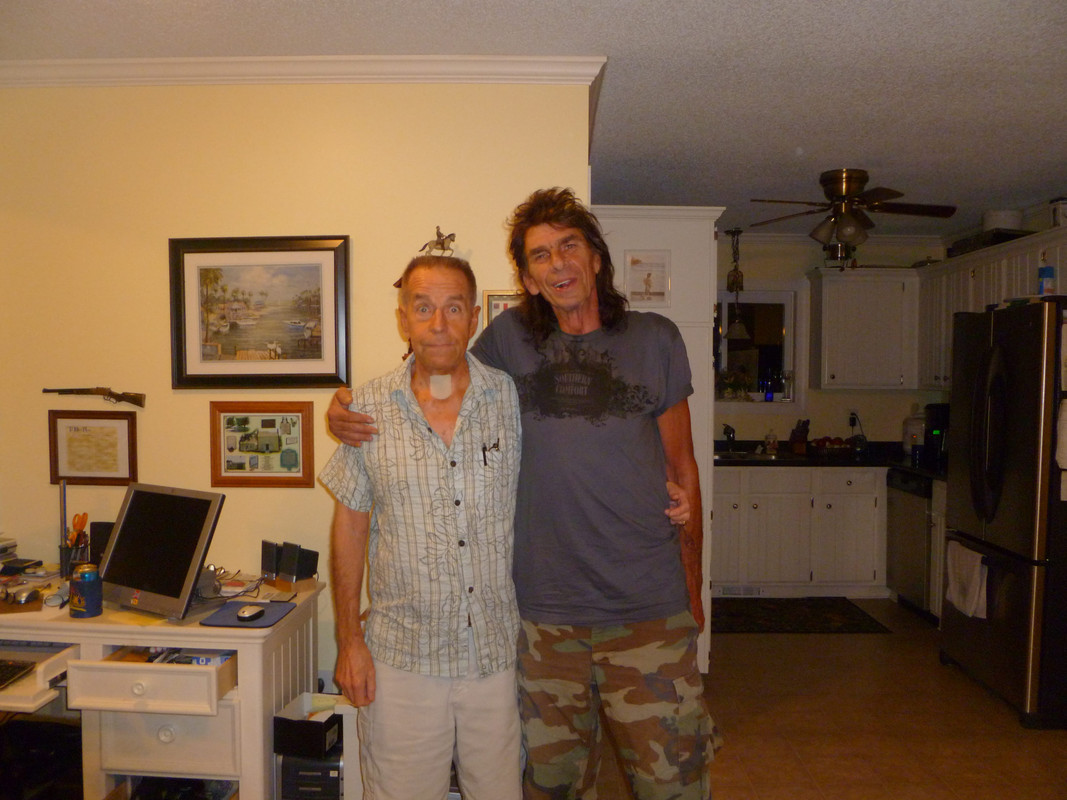
See, I didn't close my eyes for once. Maybe General Lee and Traveller on my head helped! 

I'm not sure how many here on the forum are aware of just how much I value Brock's friendship and guidance. However, I believe there are enough here that are aware of such that might find this post slightly interesting.

========

About three days ago, Brock and I were talking after he was kind enough to post a recount of my 8th grade English teacher, Mrs. Finch.............may God rest her soul, cause only He could. Anyway, I asked Brock to remind me to recount my top three favorite all-time teachers, and I use the word teacher in a white man's connotation, meaning "educator". I make this distinction to separate the difference between those who influenced me in the red world.

The teacher who comes in at #3 on my list would be Miss Bass, although she was actually Mrs. Bass. I believe the "Miss Bass" was a carry-over that went hand-in-hand with her very strong Virginia accent. Miss Bass was my first grade teacher. She was also my little brother John's first grade teacher. The funny thing is, she was our mama's fourth grade teacher. Twenty three years separated when she taught my mom to when she taught my brother. Miss Bass was 67 years old when she taught me. Today you would be hard pressed to find a teacher that made 20 years of a career. Miss Bass made 50 years of teaching young people, as my brother's class was the year that she retired.

In her room at Cherry Street Grade School, Miss Bass had two photographs on the wall............one was George Washington, the other was Marse Robert (there is a theme developing here. You will have to read farther to discover the theme.)

Miss Bass was the consummate Southern lady, by that I mean quiet spoken, gentle to a fault, but if you were stupid enough to disrespect her, she was the first to march you to the principal's office for a paddling. (What happened to paddling in school?)

My fondest memory of Miss Bass was the lessons taught, and the little plays and skits that she would produce for the entire school population to view. These always started with the American Revolution, and ended with the War of Northern Aggression.

In the classroom, Miss Bass made it crystal clear that that war of 61-65 was totally avoidable. She referred to it as "Mr. Lincoln's War", and each time today when I see 'Mr. Lincoln's War' in print, I cannot help but think most fondly of a lady from Virginia who made learning interesting.

Selecting teacher #2 has posed a great challenge. I am faced with trying to resolve the influence of a teacher that I had for the fifth and sixth grades, or for one that I was only privileged to study under for one semester my senior year in high school. I have just at this moment made that decision.

Mr. Earl Holtz was a giant of a man in stature. I believe him to be the largest teddy bear God ever created. When I first walked into his class in the fifth grade at Cherry Street Grade School, I freaked at his stature; that fear went away when I heard the first word he uttered. A kinder voice, for a male, I've never heard.

Being raised Southern, despite being born above the line, I walked up to his desk, extended my hand, and introduced myself. He graciously took my hand, and said "Mr. Warren, is it your intention to merely pass this grade, or would you like to really learn?" Thinking for some 20-30 seconds before answering, I replied, "Mr. Holtz, I am here to learn." He assigned me the first desk in front of his (remember when you lifted up the top of your desk and it has a hole in them for an ink jar? And they had 40 years of names carved into them? That was my desk for two years.) And inquiring minds might wonder...........did I scratch MY name into that desk? And the answer would be.........YES, I did, with my caramel-color handled Barlow.

Back to the story....Mr. Holtz was the only teacher at Cherry School that taught fifth and sixth grades simultaneously. I feel totally blessed in this, as it is the closest thing, except when I taught on the reservation, to a one room school. Hopefully someone on this forum actually attended a one room school, and would be kind enough to recount that experience. I found it marvelous.

Fifth grade always received the daily instruction first. I should interject this occurred just after Mr. Holtz lead us in the Lord's Prayer......and what happened to that? Oh yeah, some atheist got her way. I digress.

Mr. Holtz was seen as somewhat an outsider in my hometown. If memory serves me correct, he came from Maryland. He was teaching high school, at the time that my mother was a freshman. I know this because I have seen photos in her freshman yearbook........he was her coach on the rifle team (and what the hell happened with that?). Tell me what is wrong with schooling young adults in the safety and skills of marksmanship............totally unheard of today. Proudly, I was also on the rifle club team through high school. Again, I digress.

In two years of Mr. Holtz's lessons, I remember most clearly two things: #1, him saying most adamantly that the war for Southern independence (his words not mine) was constitutionally appropriate and that "that war" was avoidable and was most definitely a war over tariffs, not slavery (find me an educator today who will make that statement....I want to shake his/her hand). #2 most memorable influence was when Mr. Holtz showed us, on 16mm film, the Nuremberg Trials. That was a lesson I have never forgotten, and it laid the groundwork for my love of learning of anything WWII related. I stayed in contact with Mr. Holtz, working on his farm on occasion, up until his death. I could not force myself to attend his funeral. I loved him that much. I have regretted not attending his final services ever since.

"The finest teacher I ever had" was Ronald Berkshire, a mere pencil of a man, an overwhelmingly strict military disciplinarian, who has just recently passed over the river.

Mr.Berkshire taught me, in one semester, more history than I had learned from grade one through eleven combined. I must also say that in four years of university, I never had a professor that was so well-versed in history, as was Mr. Berkshire.

I believe it was in 1939 that he left the United States and became a fighter pilot for the RAF. I believe he received his flight training in Canada. I know that he met and married his first wife in England during WWII. On a personal note, I played music with his eldest child, who is still living, and I dated his middle child, now deceased for nearly two years, and my little brother dated his youngest daughter.

Mr. Berkshire never used film, maps, overhead projectors, or a pointer stick. He merely painted pictures in words. That is a trait, that has been on several occasions, applied to me. I believe those that have said such do me great honor, but an honor of which I am not worthy.

I wish that I could say that my fondest memories of lessons taught by Ron were of the war of 61-65. In all truth, I cannot make that statement; in fact, I believe we spent one day on the so-called Civil War. The reason behind that, and I can hear his voice at this moment saying, "there wasn't a damn thing civil about that war, the term civil war had no application in regards to that conflict". To loosely quote that day's lesson, simply would be to say 'it was a war of greed, waged by the Northern industrialized sector of New England; to which the Midwest fell in line like dominoes'. I believe he was right in not only his take on the war, but for not wasting any more time on the subject.

Ron Berkshire could tell you stories, first-hand accounts, of being in an underpowered, over weighted Spit Fire, and having two or three Messerschmidt's on your backside. When he taught our class about WWII, everyone, excepting the two farm boys who had worked all night, and the one cheerleader who had spent all night with the football team, lived what he taught. Though we were too young, and lucky enough to have missed it, we lived it through him. That is a teacher. That is a real educator.

Pam, Mayme and I moved to Lawrence County, Illannoy, in 1995. I believe that it was in the first week we lived here, that Pam asked "can you find me a real newspaper in this one cow town?"....no offense intended to the local papers published here, just a "city girl's" way of asking for a national paper. I left our home on Refinery Row, the baddest neighborhood there was in town, and made my way to Ada Lee's (great name, ain't it?) Candy Shop and Newsstand. I walked in the door on a Saturday morning, saw about 6-10 people sitting at vintage ice cream tables having coffee, smoking cigars and cigarettes (and what happened with that?) and reading the national papers which I had gone to find. Among those sitting was Mr. Ron Berkshire. I went to the counter, purchased a Wall Street Journal and an Evansville Courier, and on my way out stopped at the table where Ron was sitting and said "Mr. Berkshire, do you find yourself residing in Lawrence County, too?". He looked up, smiled, and said "Gentlemen, may I introduce you to Mr. Terry Warren, the finest history student I ever had the privilege to teach".

As I previously noted, Mr. Berkshire is now gone, as well as his first wife and daughter Gina. Mayme is privileged at her work, to see Mr. Berkshire's son, Allan, almost daily. I believe they have become friends, generations apart, yet Mayme is bright enough to know when she is in the presence of genius; though it pales (no disrespect Allan) to his father's.

This is undoubtedly the longest post I have ever put forth on this forum. I will not, however, apologize for its length. To do so would be an injustice to three human beings who most definitely shaped the positive side of this old half-breed. So to Miss Bass, Mr. Holtz and Mr. Berkshire, I send my highest regards, as well as the strongest salute I can muster at age 60. I thank you from the bottom of my heart and soul for giving me the best shot at making something of myself, that a person of minority, from the wrong side of the tracks in a small town, in the land of ape, could hope for.

Warmest Confederate Regards to anyone who took the time to read this far.

Brock, I kept my word. I hope neither you nor anyone else was bored.

T

Friday, December 30, 2011

Lee Chapel

Via Cousin John

Since the days of Robert E. Lee, Lee Chapel has been at the heart of life on the campus of Washington and Lee University. Imbued with tradition, it continues to be a gathering place for the University's most important events.

Construction began on the Chapel in 1867 at the request of Gen. Robert E. Lee, who served as president from 1865 to 1870 of what was then Washington College. The simple Victorian design may have been proposed by his son, George Washington Custis Lee, and the plans and specifications were drawn up by Col. Thomas Williamson; both were professors in the engineering department of neighboring Virginia Military Institute. Built of brick and native limestone, the Chapel was completed in time for graduation exercises in 1868. Lee attended daily worship services here with the students and the lower level housed his office, the treasurer's office and the YMCA headquarters (student center).

Lee died on October 12, 1870, and was buried beneath the Chapel. In 1883 an addition was made to the building which houses the memorial sculpture of the recumbent Lee by Edward Valentine and includes a family crypt in the lower level where the general's remains were moved. His wife, mother, father ("Light-Horse Harry" Lee), all of his children and other relatives are now buried in the crypt as well. The remains of his beloved horse, Traveller, are interred in a plot outside the museum entrance.

Lee's office is preserved much as he left it for the last time on September 28, 1870. The rest of the lower level became a museum in 1928, exhibiting items once owned by the Lee and Washington families.

Lee Chapel was named a National Historic Landmark in 1961 and from 1962 to 1963 the Chapel was restored with the support of the Ford Motor Company Fund. A major renovation of the Lee Chapel Museum was completed in 1998, commemorating the University's 250th anniversary in 1999. In 2007 to commemorate the 200th Anniversary of the birth of Robert E. Lee * the exhibition was re-installed and now focuses on the history of Washington and Lee University.

The chapel remains an integral part of Washington and Lee's campus even today. Concerts, lectures and other University events take place regularly in the 500-seat auditorium on the main level and its balcony.

A state-of-the-art museum is housed in the lower level and includes Lee's office, an exhibition tracing the history and heritage of Washington and Lee University, a small changing exhibtion space and a museum shop.

* Changed to reflect PC and not mention his WBTS service. Criminals all.

Lee Chapel

Monday, April 13, 2015

What to Say About Dixie?

 3rd national

What to say in brief compass about the South?—a subject that is worthy of the complete works of a Homer, a Shakespeare, or a Faulkner. The South is a geographical/historical/cultural reality that has provided a crucial source of identity for millions of people for three centuries. Long before there was an entity known as “the United States of America.” there was the South. Possibly, there will still be a Southern people long after the American Empire has col¬lapsed upon its hollow shell.

One fine historian defined the South as “not quite a nation within the nation, but the next thing to it.” The late M.E. Bradford, whose genial spirit watches over us even now, defined the South as “a vital and long-lasting bond, a corporate identity assumed by those who have contributed to it.” This is, characteristically, a broad and generous definition. He proceeded to illustrate that when visualizing the South, he always thought “of Lee in the Wilderness that day when his men refused to let him assume a position in the line of fire and tugged at the bridle of Traveler (S/B Traveller) until they had turned him aside.” This was clearly a society at war, not a government military machine